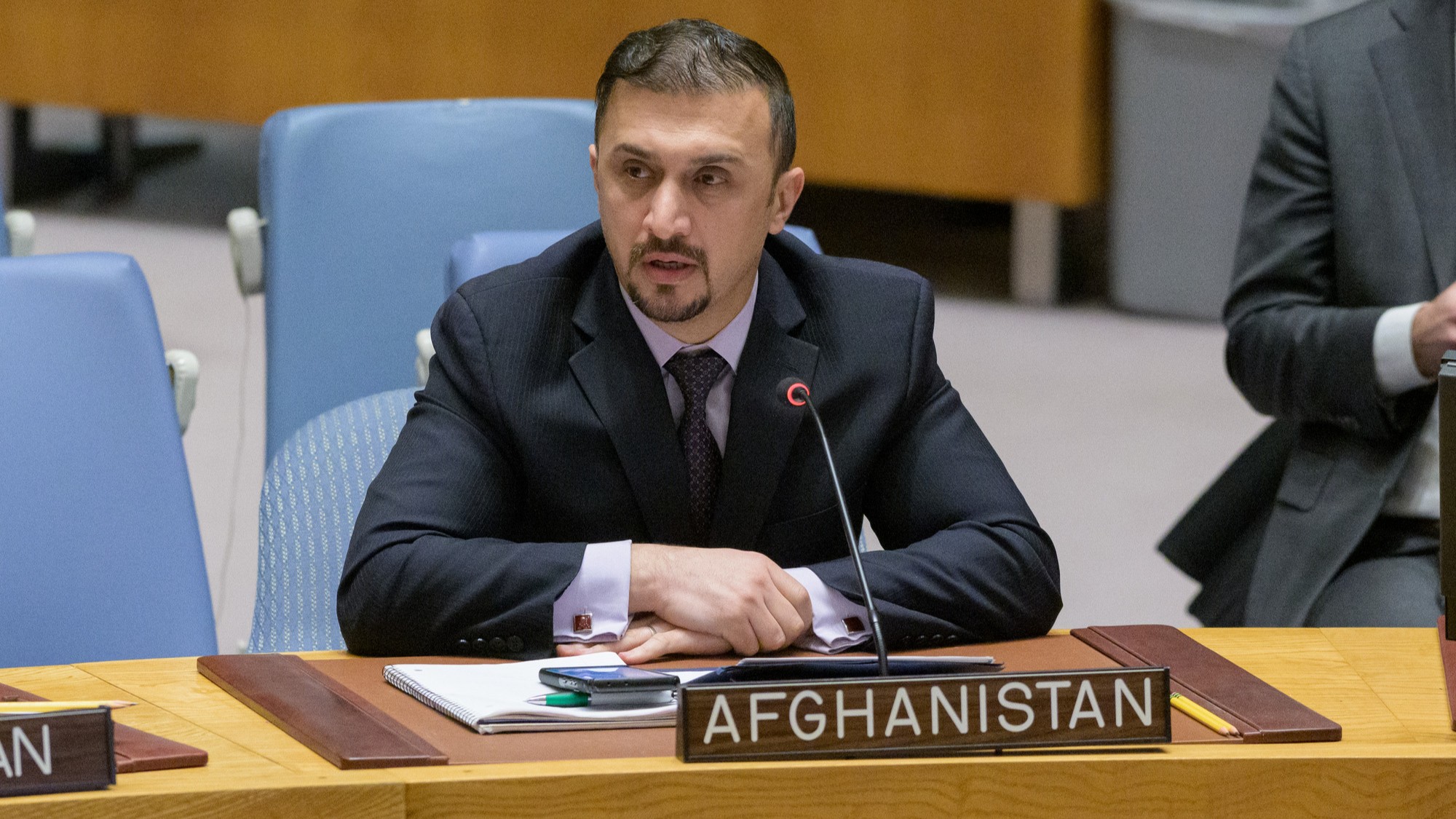
The Kabul Tribune (KT) — Nasir Ahmad Faiq, acting permanent representative of Afghanistan to the United Nations, has urged the UN to formally recognize the situation in Afghanistan as a case of “gender apartheid.”
Speaking at a joint meeting of full UN representatives on
crimes against humanity and accountability, Faiq said Afghans continue to face
systematic human rights violations under the Taliban, including arbitrary
detentions, enforced disappearances, and torture.
“Women and girls are the primary targets of these
violations,” he said. “Through laws, decrees, and institutional regulations,
they are systematically denied access to education, employment, public life,
and justice.”
Faiq also highlighted that ethnic and religious minorities,
journalists, human rights defenders, and former government employees face
targeted persecution under the Taliban. He called for strong commitments,
international cooperation, and dedicated discussions on Afghanistan in upcoming
UN conventions.
“The current situation in Afghanistan reflects a deliberate
and comprehensive system of gender-based governance,” Faiq said. “It is
imperative that this process be recognized as gender apartheid, or a crime
against humanity.”
He stressed that this is not merely a rhetorical or symbolic
proposal, but a legal recommendation that demands action.
Human rights groups, female activists, journalists, and
politicians have previously called on the UN to recognize Taliban policies
toward women as gender apartheid. Over the past four years, the Taliban have
issued more than 100 decrees restricting women’s rights and imposing severe
limitations on their participation in society.
The international community has repeatedly described
Afghanistan under Taliban rule as one of the most dangerous countries for
women, with daily restrictions, prohibitions, and hardships.







