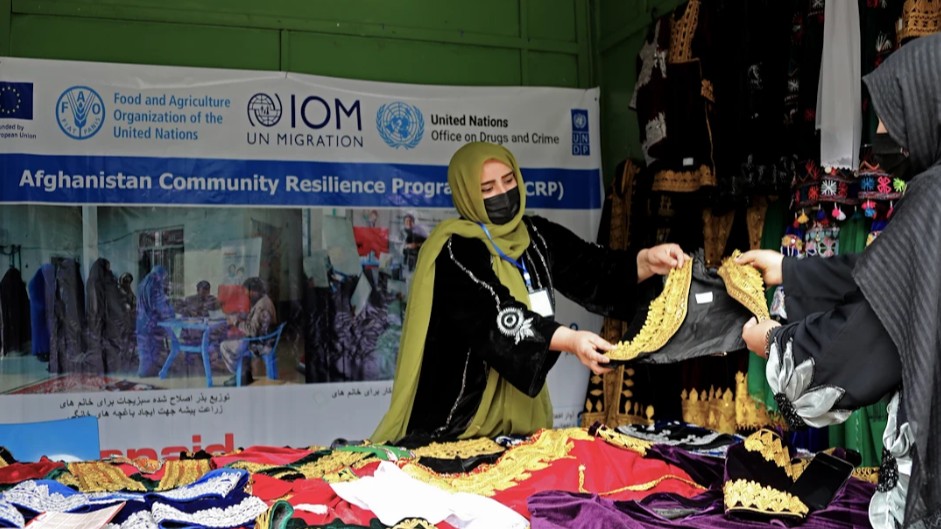
Just a few years ago, Nafisa, Laila and Zahra were
struggling to make ends meet. Nafisa became the sole provider for her son after
her husband died in a road accident. Laila's family often could not afford
basic necessities, while Zahra faced food insecurity and the threat of
eviction.
“Sometimes we could barely provide one meal a day,” Laila
recalls. “There were months when we couldn’t afford meat or dairy products.”
“The children often went to bed hungry,” Zahra says. “We
couldn’t pay our rent. We didn’t know where we would go.”
Despite these challenges, all three women were determined to
build a better future.
Using skills they could practise from home, they began
producing pickles, jams, vinegar and dried fruits and vegetables. However,
limited equipment, poor access to markets and a lack of business knowledge made
it difficult to turn their efforts into sustainable enterprises.
Through the Afghanistan Community Resilience Programme
(ACRP), supported by the European Union and implemented by UNDP and other UN
partners, the women received training, equipment and business development
support. They strengthened product quality, improved packaging and registered
their businesses, helping them compete in broader markets.
A key breakthrough came when they participated in
agricultural exhibitions in Kabul, including the Badam Bagh Exhibition. There,
they showcased their products, met traders and gained valuable insights into
branding, packaging and customer preferences. "The exhibition opened a new
world for me," says Laila. "I learned about product packaging and
branding, met traders from different provinces, and discovered how to present
my products professionally."
Applying those lessons, Laila expanded her business and
generated nearly US$7,000 in sales within three months. Her company, Tarin
Pickle and Jam Company, now employs ten women, many of them widows and female
heads of households. Her five children have returned to school, and the family
now enjoys a more secure livelihood.
Zahra also used the experience to improve her products and
connect with new buyers. Within three months, she recorded approximately
US$9,000 in sales. Her company, Meraj Native Products, now produces around
1,350 kilograms of food products each month and employs ten women. The
increased income has helped her family secure housing and return her children
to school. For Nafisa, the transformation has been equally significant. Through
her company, Zinat Emran Food Processing, she built relationships with local
farmers and expanded production. Her monthly net income increased from around
US$50 in 2022 to approximately US$1,000 in 2026.
Today, Nafisa employs ten women and provides training in
food processing, quality control and food safety. The business has enabled her
to receive medical treatment, purchase a home and support her son's education.
He is now studying medicine in Kandahar.
Together, the three businesses employ 30 women and create
opportunities that extend far beyond their immediate workforce. By sourcing
produce from local farmers and processing fruits and vegetables that might
otherwise spoil, they contribute to stronger local value chains and more
resilient communities.
While challenges such as reliable electricity, refrigeration
and access to finance remain, Nafisa, Laila and Zahra are planning for the
future. Their ambitions include expanding production, reaching new markets and
eventually exporting their products.
Their stories show how access to skills, resources and
markets can help women entrepreneurs build successful businesses, create jobs
and drive economic growth in their communities.