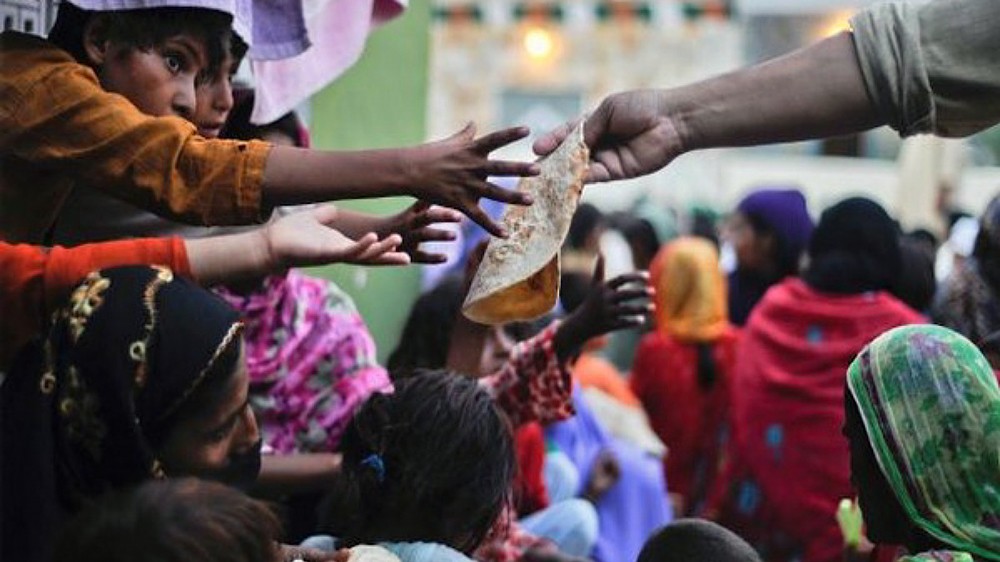
The Kabul Tribune (KT) — Between January and November 2025, humanitarian partners in Afghanistan reached 16.4 million people with at least one form of assistance, according to the United Nations Office for the Coordination of Humanitarian Affairs (OCHA). Of those, 10.1 million received food assistance, 7.4 million accessed healthcare services, 5.9 million received protection support, and 5.2 million benefited from nutrition programs.
OCHA’s report highlights that 3.7 million people benefited
from three or more sectoral interventions, reflecting multi-sectoral reach.
However, food assistance continues to dominate the overall response,
underlining the scale of acute food insecurity across the country.
The humanitarian response in 2025 was supported by $870
million in new funding, representing 36 percent of the total requirement,
supplemented by carryover funds from 2024. Yet, $1.55 billion, or 64 percent of
the $2.42 billion originally requested, remains unfunded, covering only
one-third of the most urgently prioritized needs.
In response to constrained funding, partners plan to
prioritize integrated and cost-effective approaches, including strengthened
inter-sectoral targeting, biannual gap analyses, improved methodologies to
calculate reach, and greater transparency in reporting. Disaggregating food
assistance by distribution rounds will help better capture repeat support and
identify unmet needs.
OCHA stressed that the ability of humanitarian partners to
deliver life-saving assistance depends on sufficient and flexible funding,
functional financial systems, assurances for aid worker safety, and an
environment that safeguards principled humanitarian action. Special emphasis is
placed on equitable access for women and girls, and enabling Afghan women
humanitarian workers to participate safely and meaningfully in the response.







