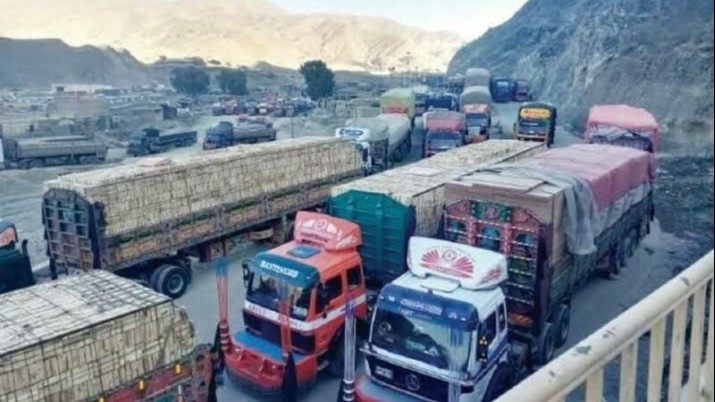
Since October 2025, when trade crossings between Afghanistan and Pakistan were closed following escalating tensions between the Taliban and the Pakistani government, the economic strain has fallen most heavily on ordinary Afghans.
Taliban officials have said the closures have had little
impact. But reporting from within the country suggests a widening gap between
official claims and daily reality, as families face higher prices, dwindling
supplies and fewer options for survival.
The cost of basic goods has risen sharply. A bag of rice
that once sold for 2,500 to 3,000 Afghanis now costs between 4,000 and 4,600,
and is increasingly difficult to find. Cooking oil prices have climbed from
roughly 1,500–1,650 Afghanis per bottle to as high as 2,100. Flour, another
household staple, has also become more expensive, further straining already
tight budgets.
Medicines have also become more costly and less accessible.
For years, Pakistan served as Afghanistan’s primary supplier of pharmaceutical
products. With that supply disrupted, shortages have emerged and prices have
increased, compounding difficulties in a country with an already fragile health
care system.
These pressures reflect deeper structural challenges. Since
the return of the Taliban to power, Afghanistan’s economy has remained fragile,
shaped by reduced foreign aid, limited international engagement and widespread
poverty. International organizations have repeatedly warned of worsening food
insecurity and economic instability.
Aid flows have declined significantly, with countries
including the United States reducing or suspending assistance, citing concerns
over governance and interference in aid distribution. The loss of aid has left
millions increasingly dependent on local markets that are now under strain.
In response to the closure of eastern trade routes,
Afghanistan has turned to alternative partners. Imports from Iran have
increased, offering a partial buffer. But that alternative is uncertain.
Regional tensions involving the United States and Israel have placed additional
pressure on Iran’s economy, raising concerns about the reliability of supply
routes. Reports of strikes affecting the strategic Chabahar port — a key hub
linking Iran, India and Afghanistan — have added to the uncertainty.
To the north, options are also limited. Central Asian
countries have expressed growing concern about security risks linked to Afghanistan,
constraining deeper economic cooperation. Even China, which has shown interest
in Afghanistan’s mineral resources, remains cautious, weighing economic
opportunities against security concerns.
For many Afghans, these geopolitical shifts translate into
immediate hardship. Prices are rising faster than incomes, jobs remain scarce
and access to essential goods is becoming less reliable.
The Taliban, now the country’s de facto authorities, face
mounting pressure to address both domestic challenges and international
concerns, particularly regarding human rights, governance and security. Their
ability to rebuild trust abroad may prove critical to easing Afghanistan’s
economic isolation.
Inside the country, however, the urgency is immediate. After decades of conflict, many Afghan families have little capacity to absorb further shocks. As borders remain closed and economic pressures mount, the burden continues to fall on those least able to bear it.
Adam Wisely is an economist specializing in the economic dynamics of South Asia, the Middle East and Central Asia, with a focus on regional trade, development challenges and cross-border economic policy.







