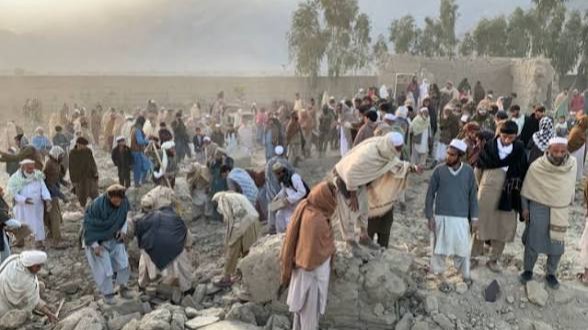
The Kabul Tribune (KT) — More than 94,000 people have been displaced and nearly 100,000 others cut off from essential services due to escalating military clashes along the Afghanistan-Pakistan border, the United Nations Office for the Coordination of Humanitarian Affairs (OCHA) said.
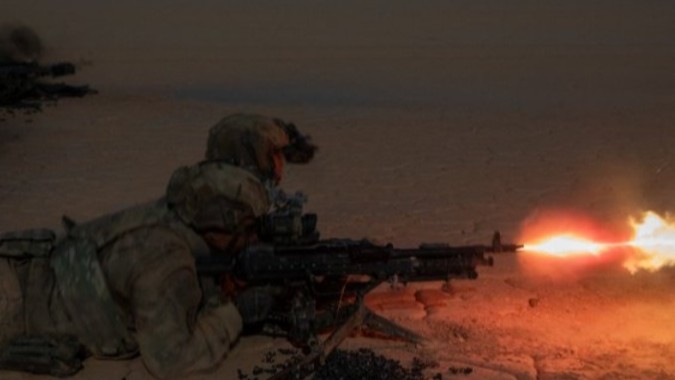
The situation update, covering March 17 to April 1, 2026, highlights the growing humanitarian impact of cross-border shelling, airstrikes and armed clashes that have intensified since late February.
According to OCHA, civilian casualties have reached several hundred, including children and at least one humanitarian worker. Despite a temporary ceasefire during Eid from March 19 to March 24, hostilities continued during and after the holiday period, particularly in eastern and southeastern provinces.
More than 94,000 people — about 13,400 families — have been displaced across Khost, Kunar, Nangarhar, Paktia and Paktika provinces, with assessments ongoing in Nuristan.
The violence has also caused widespread damage to civilian infrastructure. At least 25 health facilities and 41 schools across Kabul, Khost, Kunar, Nangarhar, Paktia and Paktika have been damaged, closed or forced to suspend operations, disrupting essential health, nutrition and education services.
On March 17, an airstrike destroyed the Omid Addiction Treatment Hospital in Kabul. Additional damage was reported to a market in Paktika and a major fuel depot in Kandahar. Religious structures were also reportedly hit in Kunar and Nuristan. At least 345 homes have been destroyed or severely damaged.
Humanitarian access remains severely restricted in parts of Nuristan province. Nearly 100,000 people in Bargematal and Kamdesh districts have been cut off from aid since late February due to ongoing hostilities and security risks.
The main access route to these districts, which passes through Kunar province near the border, has become too dangerous for civilians and aid workers due to the risk of cross-border fire. On March 18, an international NGO worker and her son were killed when their vehicle came under fire along the route.
As a result, residents in these areas are facing severe shortages of food and essential items, along with limited access to health services. Efforts are underway to open an alternative route through the Poprak Pass, but it is not expected to become operational soon.
The Torkham border crossing briefly reopened on March 26, allowing 339 Afghans to return before closing again the same day. On that day, an unexploded ordnance incident injured three children. Due to insecurity, explosive ordnance disposal teams were only able to reach the site on April 1, where they cleared four devices.
OCHA also warned that mine action operations are being constrained by funding shortages. Currently, 151 mine action teams are active across Afghanistan, down from 198 in March 2025 and 290 in March 2024.
Despite ongoing hostilities, humanitarian partners continue to deliver assistance. By the end of March, more than 34,000 people had received emergency food aid, including high-energy biscuits. Thousands of displaced families have also received emergency shelter, medical supplies and cash assistance totaling nearly $850,000.
OCHA said the Afghanistan Humanitarian Fund is considering a rapid funding allocation to sustain life-saving mine action activities amid growing needs.