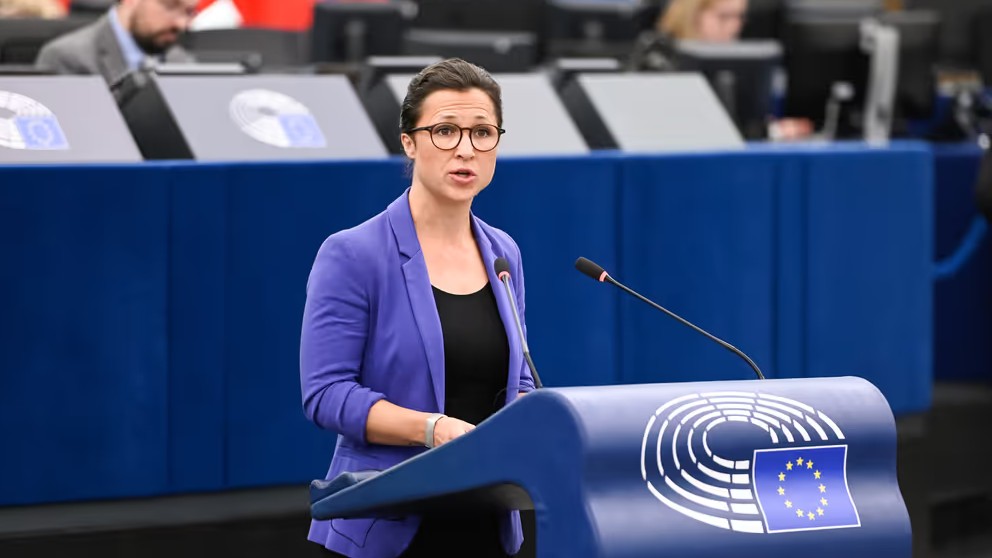
The Kabul Tribune (KT) — A German member of the European Parliament has renewed her opposition to possible talks between the European Union and the Taliban in Brussels, arguing that any engagement with Afghanistan’s de facto rulers would undermine the bloc’s credibility and help legitimize the group.
Hannah Neumann, a member of the European Parliament from
Germany, criticized plans by the European Commission to host a Taliban
delegation in Brussels as early as mid-June to discuss the return of Afghan
nationals facing deportation orders.
“The EU must not invite the Taliban to talks in Brussels.
Because anyone who sacrifices foreign policy principles for deportation deals
loses credibility and security,” Neumann wrote Tuesday on the social media
platform X.
Speaking to Germany’s RedaktionsNetzwerk Deutschland (RND),
Neumann said engagement with the Taliban could not be treated as a purely
technical matter.
“Inviting the Taliban is not a technical process. Every
meeting, every photo, every visa is a step toward legitimacy and a political
success for them,” she said. “It is cynical to issue visas to Taliban
representatives for Brussels while opponents of the Taliban in Afghanistan
remain in uncertainty because all visa programs for them have been ended.”
The European Commission has confirmed preparations for
discussions with Taliban representatives as part of efforts to facilitate the
return of Afghans whose asylum applications have been rejected or who are
subject to deportation orders.
According to RND, 20 European countries — including 19
European Union member states and Norway — have urged the Commission to begin
technical talks with the Taliban on migrant returns. EU migration officials
reportedly traveled to Kabul earlier this year for preliminary discussions.
The report said the Taliban are seeking greater diplomatic
access to Europe in exchange for accepting deported Afghan nationals, a demand
that has drawn criticism from some European lawmakers and human rights
advocates.
The proposed talks come as several European governments face
growing domestic pressure to increase deportations, particularly of migrants
convicted of crimes, while continuing to grapple with how to deal with the
Taliban administration, which has not been formally recognized by the European
Union since the group returned to power in Afghanistan in 2021.
The Taliban have repeatedly sought broader international
engagement and diplomatic recognition, but Western governments have largely
conditioned deeper ties on improvements in human rights, especially the rights
of women and girls.







