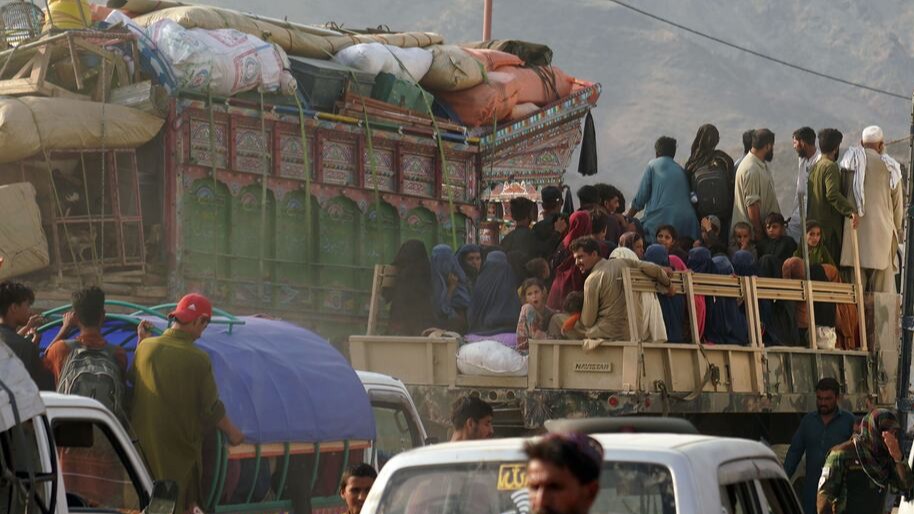
The Kabul Tribune (KT) — Afghanistan is facing one of the world's largest displacement crises as poverty, climate-related disasters and the return of millions of Afghans continue to strain livelihoods and public services, U.N. agencies warned Monday.
According to the latest socioeconomic review by the U.N.
Development Programme (UNDP) in Afghanistan, the country's fragile economy,
four decades of conflict, the return of 2.7 million Afghans, worsening droughts
and earthquakes, and declining participation of women in the economy are placing
increasing pressure on communities across the country.
"In Afghanistan, crises rarely happen one at a
time," UNDP Administrator Alexander De Croo said during a joint visit with
U.N. High Commissioner for Refugees Barham Salih to meet returnee communities,
humanitarian partners and Taliban authorities.
The report said an earthquake over the past year destroyed
homes and livelihoods, while poverty remains widespread. It estimated that 74%
of Afghanistan's population, or about 29 million people, are unable to meet
their basic needs.
UNDP said it is supporting both displaced people and host
communities to help them rebuild their lives and transition from emergency
assistance to long-term recovery.
During their visit, the U.N. officials met communities affected
by earthquakes in Jalalabad and visited development projects in the Sutan
Valley, where flood protection and irrigation initiatives are creating jobs
while reducing disaster risks. The projects include women producing wire mesh
and men making bricks for protective barriers designed to safeguard farmland
and local infrastructure.
"Emergency aid saves lives. Development gives people
their lives back," De Croo said.
The report also highlighted progress under a U.N.-supported
initiative in Kunduz and Baghlan provinces aimed at helping returnees,
internally displaced people and host communities. The program has cleared more
than 6,400 square meters of land contaminated by mines, identified 425
households for permanent housing and prioritized 28 community infrastructure
projects, including irrigation systems and flood protection works.
Meanwhile, the U.N. refugee agency, UNHCR, said it will
continue efforts to strengthen asylum systems and expand legal pathways for
Afghans seeking protection abroad. The agency estimates that more than 570,000
Afghans will require resettlement in 2026, while promoting opportunities for
education, labor mobility and family reunification.
Afghanistan remains one of the world's largest humanitarian
and displacement emergencies. Millions of Afghans have been displaced by
decades of conflict, economic collapse, natural disasters and climate shocks,
while large-scale returns from neighboring Iran and Pakistan have further
increased pressure on humanitarian services and local communities.