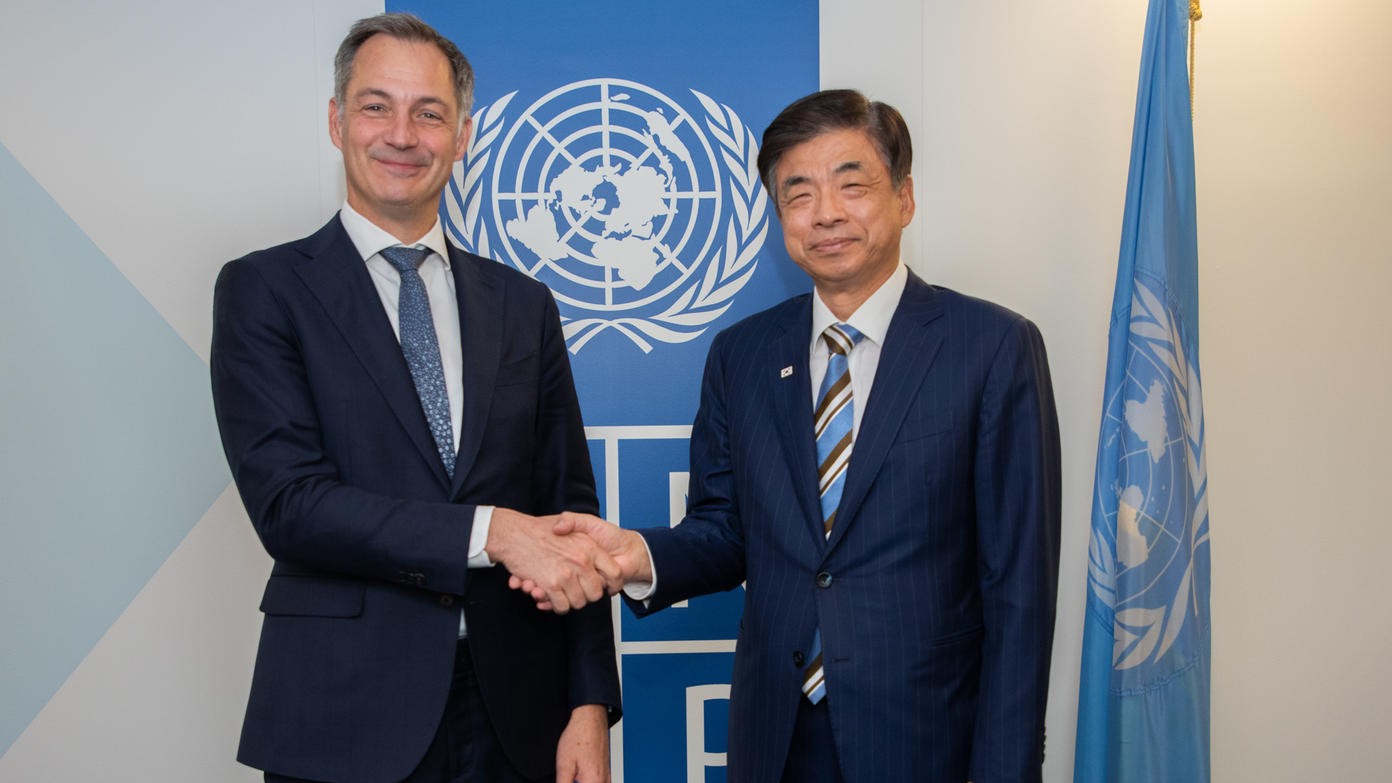
The Kabul Tribune (KT) — The United Nations Development Programme (UNDP) and the Government of the Republic of Korea have launched the second phase of the Relief, Employment and Vital Infrastructure for the Vulnerable in Emergencies (R.E.V.I.V.E.) initiative, a $50 million program that includes Afghanistan among six crisis-affected countries.
According to UNDP, the initiative will run from July 2026 to
July 2027 and is expected to help about 3.8 million people across Afghanistan,
the State of Palestine (Gaza), Myanmar, Sudan, South Sudan and Syria rebuild
their lives through early recovery and resilience programs.
For Afghanistan, the program will focus on restoring
critical infrastructure and essential services, creating emergency employment
opportunities, supporting livelihoods and local economies, and strengthening
local institutions to lead recovery efforts.
UNDP said the initiative aims to reduce long-term dependence
on humanitarian assistance by investing in early recovery measures before
crises become more deeply entrenched.
"Communities cannot rebuild their futures on emergency
assistance alone," said Shoko Noda, Assistant Administrator and Director
of UNDP's Crisis Bureau. She said recovery should begin as early as possible by
restoring livelihoods, rebuilding essential services and helping local
economies recover.
According to UNDP, the first phase of the R.E.V.I.V.E.
initiative, implemented between July 2025 and June 2026, cleared more than 719,000
metric tons of debris, rehabilitated over 10,000 community infrastructure
assets, provided improved shelter for more than 52,000 people, expanded access
to essential services for more than 508,000 people, and helped improve
livelihoods for more than 73,000 people across participating countries.
The second phase builds on those achievements while
expanding operations to Sudan and South Sudan for the first time.
UNDP said the new phase will support 1.35 million direct
beneficiaries and 2.5 million indirect beneficiaries across the six
participating countries through integrated early recovery programs that combine
infrastructure rehabilitation, employment, livelihood restoration and
community-led recovery planning.
The agency added that the program will also use AI-powered RAPIDA
assessments to help identify priority areas and guide targeted early recovery
interventions in Afghanistan and the other participating countries.