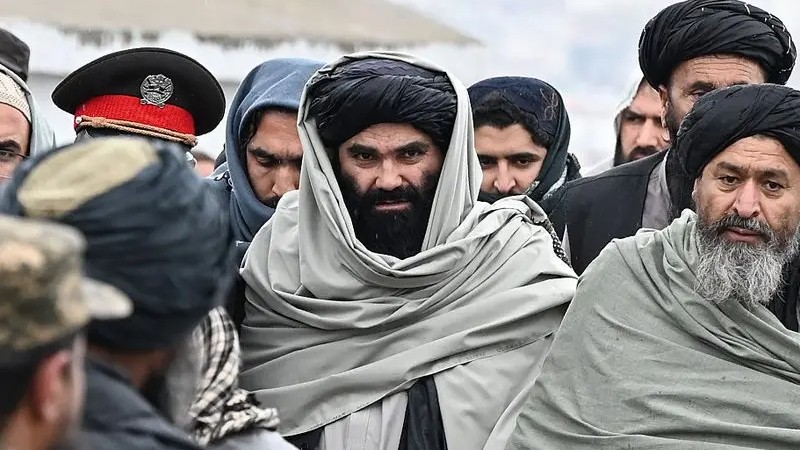
The Kabul Tribune (KT) — An analysis published by The Interpreter argues that nearly five years after returning to power in August 2021, the Taliban have largely defied predictions of internal fragmentation and are instead pursuing an ambitious campaign to consolidate centralized state authority across Afghanistan.
According to the analysis, the Taliban's greatest challenge
is no longer seizing power but transforming their military victory into lasting
political control in a country where authority has traditionally been divided among
local strongmen, tribal leaders, and regional patronage networks.
The report identifies Badakhshan province as the latest and
most significant test of that strategy. Tensions over political influence,
mineral resources, and local authority nearly escalated into armed conflict in early
July 2026, when prominent local commander Juma Khan Fateh was detained by the
Taliban before being released after publicly pledging loyalty to the group's
leadership.
Bordering China, Pakistan, and Tajikistan, Badakhshan is
home to some of Afghanistan's richest deposits of gold, lead, zinc, and
precious gemstones. The analysis says the Taliban view the province as central
to their efforts to expand mining, attract foreign investment, and strengthen
the country's economic base.
However, the report says the expansion of mining projects
has intensified local grievances. Disputes have emerged over the displacement
of poppy farmers, the conversion of agricultural land into mining concessions,
the diversion of water resources to mining operations, the unequal distribution
of mining revenues, and the growing presence of Chinese nationals in the
province.
According to the analysis, these disputes have evolved into
a broader struggle between entrenched local power structures and the Taliban's
efforts to impose centralized authority.
The report says the confrontation has largely centered on Juma
Khan Fateh, a prominent local Tajik commander, and Haji Bashir Noorzai, one of
the Taliban leadership's closest political allies and a key architect of the
group's economic strategy. While the rivalry has been widely portrayed as a
dispute over control of lucrative gold and gemstone mines, the analysis argues
it reflects a broader campaign by the Taliban to dismantle regional power
networks and replace them with direct control from the central leadership.
Before the collapse of the former Afghan republic in August
2021, weak state institutions, corruption, and limited government authority
outside major urban centers enabled local commanders, businessmen, and criminal
networks to establish independent power bases. According to the analysis, the
Taliban are now attempting to reclaim control over the country's principal
sources of revenue, particularly mining and the narcotics economy.
The report notes that control over customs posts, mines,
trade routes, and the narcotics trade has historically been a more meaningful
measure of political authority in Afghanistan than formal state institutions.
According to the analysis, the Taliban's first priority
after taking power was to establish a monopoly over the use of force by
disarming the population, eliminating armed opposition, and bringing
independent armed groups under their control. Their next objective has been to
tighten control over the country's economic resources, with Badakhshan emerging
as the most visible test of that effort.
The analysis says the outcome could also reshape regional
policies toward Afghanistan. China is seeking greater stability to safeguard
mining and infrastructure investments, Iran has expanded engagement with the
Taliban while pursuing economic opportunities, and Pakistan has traditionally
relied on relationships with local Taliban commanders to protect its interests.
The report also notes that although internal Taliban
rivalries—particularly those involving Sirajuddin Haqqani, the Taliban's
interior minister—have persisted, they have so far been managed without
triggering the major split many observers had predicted.
The analysis concludes that the situation in Badakhshan
suggests the Taliban are now applying the same strategy of consolidation beyond
their own ranks by seeking to neutralize influential regional power brokers.
How the group manages future confrontations with entrenched local elites, the
report argues, will determine whether Afghanistan enters another period of
fragmented rule or develops its most centralized political system in decades.







