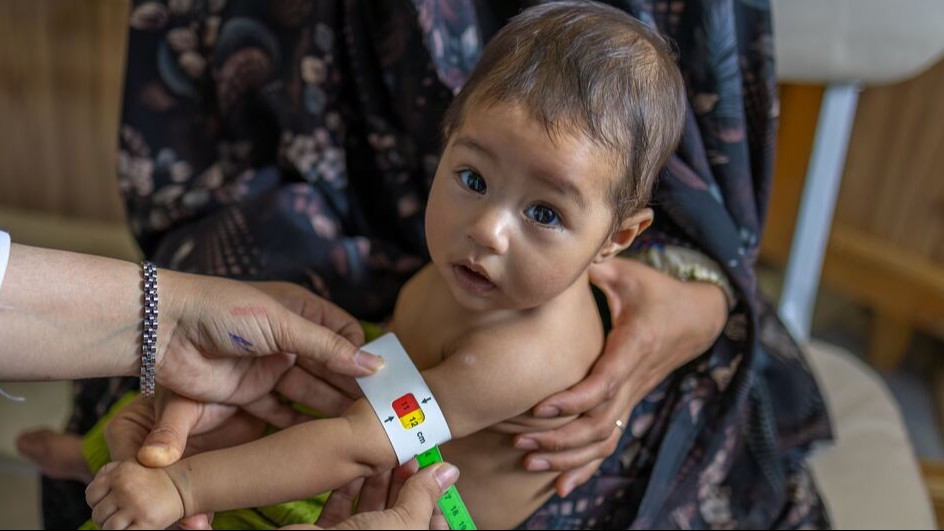
The Kabul Tribune (KT) — The United Nations World Food Programme (WFP) has warned that 14 million Afghans are now facing acute hunger, while child malnutrition has reached critical levels in 12 provinces, the highest number ever recorded.
WFP said in a new alert Tuesday that one in three Afghans is
experiencing acute food insecurity and that the agency has enough resources to
provide food assistance to only one in nine people facing acute hunger.
The agency said conflict, widespread unemployment, rising
food prices, declining humanitarian funding and disruptions to supply routes
are worsening the crisis.
John Aylieff, WFP’s country director for Afghanistan, said
the return of nearly 6 million Afghans from neighboring countries since
September 2023 has placed additional pressure on an already fragile economy.
“There are simply not enough jobs to sustain” the returnees,
Aylieff told journalists in Geneva from Kabul.
He said conflict with Pakistan and the crisis in the Middle
East have disrupted trade routes and increased the prices of staple foods by
20% to 30%, leaving many poor Afghans unable to afford basic food.
Child Malnutrition at Critical Levels
WFP said child wasting, considered the most dangerous form
of malnutrition, has reached critical levels in one-third of Afghanistan’s
provinces.
Aylieff said the number of children arriving at health
centers for treatment is rising sharply, with 80% of the most severe cases
involving children under 2.
He warned that funding shortages have forced humanitarian
organizations to turn away many severely malnourished children at a time when
their need for treatment is greatest.
The agency said millions of malnourished Afghan children are
at risk of being left without assistance, potentially resulting in preventable
deaths.
WFP currently treats malnourished children under 5 and
pregnant and breastfeeding women at health centers across Afghanistan in
partnership with UNICEF. However, declining humanitarian funding has forced the
agency to limit assistance to only a fraction of those most in need.
The distribution of specialized nutritious food designed to
prevent malnutrition and stunting was completely suspended in May 2025,
according to WFP.
Families Struggling to Afford Food
WFP highlighted the case of Farida, a mother of three in
southern Kandahar province, as an example of the worsening crisis.
Her elderly husband works as a street vendor and earns less
than $1 a day, leaving the family unable to afford nutritious food, healthcare
and other basic necessities.
Two of Farida’s children suffer from anemia, while her
6-year-old son has been too weak to attend school for months because of acute
malnutrition.
According to WFP, the family has been forced to survive
largely on tea and bread because it cannot afford more nutritious food.
Farida told WFP that without food assistance from a
WFP-supported health clinic, her children would likely not survive.
WFP Seeks $500 Million Before Winter
WFP said its emergency food assistance and nutrition
operations in Afghanistan require about $900 million in funding for 2026.
The agency said it needs an additional $500 million before
winter to address acute food needs and prevent the humanitarian situation from
deteriorating further.
Aylieff said WFP was unable to meet food needs during the
first half of the year because of funding shortages and warned that the months
leading up to winter represent a critical period for food security.
Meanwhile, Olga Cherevko, a spokesperson for the U.N. Office
for the Coordination of Humanitarian Affairs (OCHA) in Afghanistan, said many
Afghans are exhausted by poverty, hunger, climate-related shocks, debt and the
daily struggle to provide for their families.
Despite the end of the two-decade conflict following the
Taliban takeover, WFP and humanitarian agencies project that 3.7 million Afghan
children and 1.2 million pregnant and breastfeeding women will suffer from
malnutrition.
OCHA said Afghanistan’s 2026 humanitarian response plan is
severely underfunded, with only 26% of the required funding secured.
Humanitarian agencies have warned that worsening hunger
could contribute to increased migration, radicalization and instability, with
consequences extending beyond Afghanistan’s borders.







