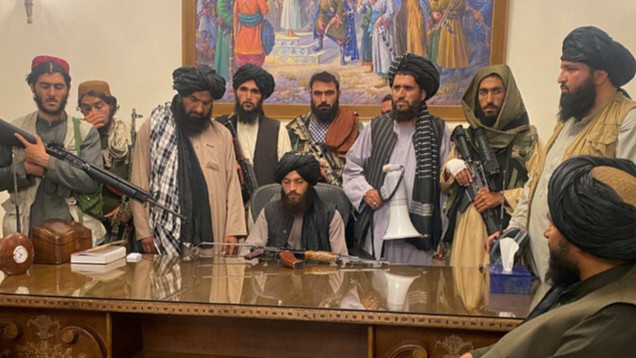
15 August 2021 was a day when hope collapsed for Afghanistan, especially for the younger generation and millions of women and girls. It was the day the Taliban returned to power, and the freedom, education, rights, and future of an entire generation were sacrificed.
The failed policies and decisions of the United States and
its allies created the conditions for the Taliban’s return to power. The
disastrous withdrawal and abandonment of Afghanistan left millions facing a
painful reality: the Taliban once again controlled the lives and future of the
Afghan people.
Even more painful is that, over these five years, while
Afghan women and girls have been denied education, employment, freedom, and
fundamental human rights, international aid and financial flows to Afghanistan
have continued. The international community must ensure that no aid or
financial resources contribute to strengthening the Taliban’s system of
repression.
It is shameful when political interests and the decisions of
powerful states are placed above the lives of an entire generation.
From the Biden administration and the legacy of U.S. policy
in Afghanistan to the policies of the Trump administration and the approach of
other countries, Afghans have every right to ask: Why should Afghan women,
girls, and the younger generation pay the price for the political failures of
powerful governments?
When financial resources continue to reach Afghanistan in
ways that benefit the Taliban, this raises serious concerns about enabling a
regime accused of widespread human rights violations. At the same time, some
countries are moving toward normalising relations with the Taliban, while the
United Nations and the international community have still failed to deliver
meaningful accountability for those responsible for grave abuses.
But one fundamental question remains: Where is justice?
Where is the International Criminal Court? Where are human rights?
Why have those responsible for crimes, repression, and
widespread violations of the rights of the Afghan people still not been held
meaningfully accountable? Why do political leaders and officials who played
with the future of Afghanistan and its younger generation during the Republic,
and who were involved in critical decisions, continue their political
activities without accountability?
Justice must not apply selectively. Every individual or
group involved in crimes, corruption, betrayal of the Afghan people, or human
rights violations must be held accountable before the law and the people of
Afghanistan.
Meanwhile, Afghan women and girls continue to face exclusion
from education and employment, forced marriage, violence, psychological
pressure, and the loss of hope for their future. Soldiers and civilians also
continue to lose their lives under different names and justifications.
How much longer?
Over the past five years, a large part of my work,
reporting, and advocacy has focused on Afghanistan, Taliban abuses, gender
apartheid, and the systematic denial of education, freedom, employment, and
fundamental human rights to women and girls.
Afghan women and girls are still standing. They are
protesting, raising their voices, and fighting for freedom. Yet the world still
does not listen enough. Some continue to use the suffering of Afghan women and
girls for projects, political interests, and personal agendas.
For me, this is not simply a political issue or the silence and failures of the Republic. It is the pain of a stolen generation and a stolen nation. The world’s promises to Afghanistan have been broken, and a new generation has lost hope for a better future.
We have not forgotten 15 August, and we never will.
Until the people of Afghanistan, especially women and girls, regain their freedom, education, employment, dignity, and fundamental human rights, we will continue to fight for a free Afghanistan and continue to amplify their voices.
The views expressed in this article are solely those of the author and do not necessarily reflect the editorial stance of The Kabul Tribune.
Jahanzeb Wesa, Human Rights Activist & Freelance
Journalist







