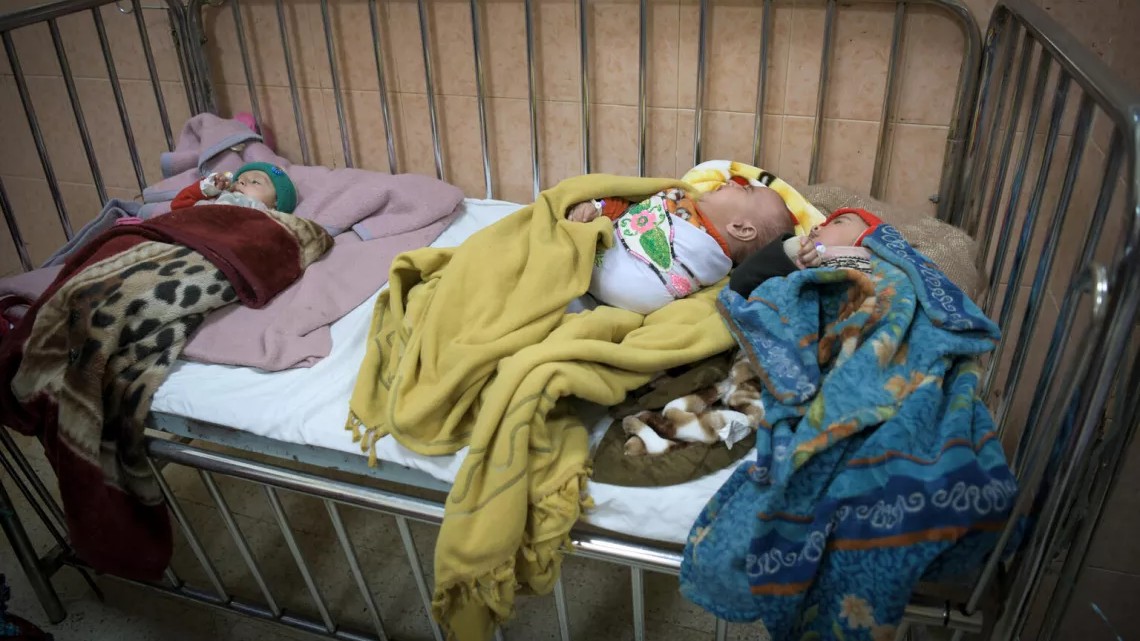
The Kabul Tribune (KT) — Afghanistan's child malnutrition crisis is worsening as shortages of therapeutic food and funding disruptions threaten access to lifesaving treatment, UNICEF said in a report covering the first six months of 2026.
An estimated 3.7 million children under 5 are expected to suffer acute malnutrition in Afghanistan this year, including about 942,000 children with severe acute malnutrition, according to UNICEF. Another 1.2 million pregnant and breastfeeding women are projected to be acutely malnourished.
But as more children need treatment, humanitarian agencies are struggling to keep programs supplied.
Since April, shortages of supplementary feeding commodities and interruptions in supplies of ready-to-use therapeutic food, or RUTF, have reduced admissions to nutrition treatment programs, UNICEF said. Increasing numbers of children requiring inpatient care are also pointing to worsening conditions and delays in getting treatment.
The shortages come as Afghanistan faces a broader humanitarian funding crisis. About 21.9 million people — nearly 45% of the population — are estimated to need humanitarian assistance this year, including 11.6 million children.
Humanitarian organizations had received only $239 million by June toward a $1.71 billion response plan, leaving a funding gap of about $1.47 billion, according to UNICEF. The shortfall has forced aid groups to scale back activities and focus increasingly on the most urgent lifesaving needs.
Food insecurity remains one of the biggest pressures on families. About 17.4 million Afghans are projected to face acute food insecurity at crisis levels or worse, including 4.7 million facing emergency levels, according to the latest Integrated Food Security Phase Classification analysis.
For families already dependent on daily wages, subsistence farming or informal work, rising prices, transportation costs and disruptions to regional trade have made it harder to afford food and reach basic services.
The nutrition crisis has also been vulnerable to sudden disruptions caused by conflict and population movements.
In February, cross-border hostilities in eastern Afghanistan temporarily shut 16 nutrition sites, cutting access to treatment for more than 1,000 children and 200 pregnant and breastfeeding women, UNICEF said. Faryab and Paktika provinces were projected to face critical levels of acute malnutrition.
Despite those pressures, UNICEF-supported programs reached millions of people during the first half of the year.
More than 18.9 million people accessed essential health services through UNICEF-supported facilities across all 34 provinces. UNICEF screened 6.8 million children for wasting and provided treatment to 363,810 children with severe wasting and high-risk moderate wasting.
The agency also supported 55,937 vulnerable children through community-based education and temporary learning spaces, 67% of them girls, including children who had returned to Afghanistan and those who were out of school.
A cash assistance program for mothers and children reached 65,162 households, benefiting more than 576,000 people. UNICEF said evidence from the program showed improvements in food security as well as maternal and child health outcomes.
But the scale of those interventions underscores the size of the challenge facing Afghanistan.
The country entered 2026 already weakened by years of economic hardship, poverty, recurring disease outbreaks, climate shocks and population movements. Restrictions affecting women and girls have further complicated access to services and the ability of humanitarian organizations to operate.
The result is a crisis in which food insecurity, poverty and gaps in health services reinforce one another. Children who do not receive adequate food are more vulnerable to illness, while disease and delayed treatment can worsen malnutrition.
For aid organizations, the immediate challenge is increasingly straightforward: ensuring that children who are identified as severely malnourished can actually receive the treatment they need.
With funding falling far short of requirements and supplies under pressure, UNICEF's figures suggest that Afghanistan's humanitarian crisis is no longer simply about how many people need assistance. It is also about whether the systems meant to keep the most vulnerable children alive can continue reaching them.







