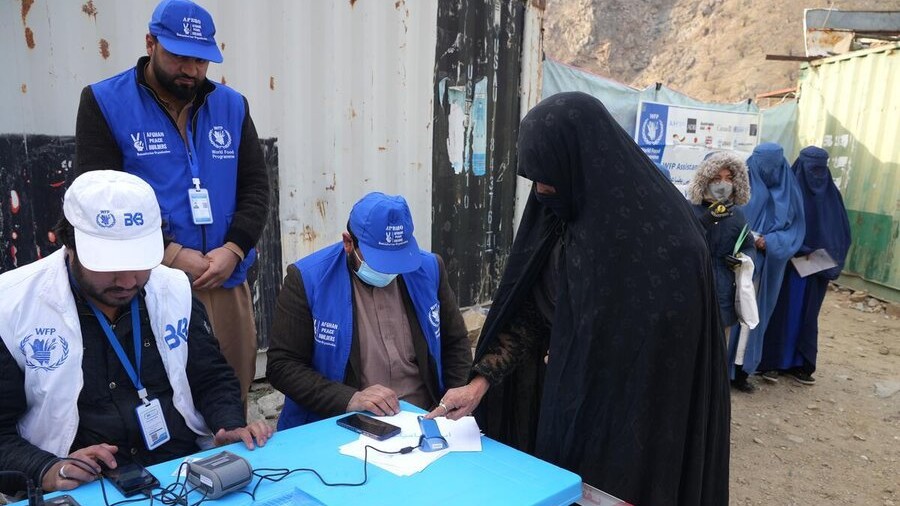
The Kabul Tribune (KT) — Restrictions on humanitarian access temporarily halted 18 aid programs across Afghanistan in July, while restrictions affecting women continued to disrupt relief operations, according to a new United Nations assessment.
The U.N. Office for the Coordination of Humanitarian Affairs, known as OCHA, recorded 30 humanitarian access incidents during the month, a 50% decline from the 60 incidents reported in June.
Despite the decrease, the incidents had significant operational consequences. Eighteen resulted in the temporary suspension of aid programs, while two led to the temporary closure of facilities, OCHA said.
By the end of July, 11 of the 30 incidents had been resolved, while 19 remained pending.
Interference in humanitarian activities was the most frequently reported problem, accounting for 16 incidents. Violence against humanitarian personnel, assets and facilities accounted for 12, while two involved restrictions on the movement of aid agencies, staff or goods.
Restrictions on women
OCHA documented 11 incidents involving gender-related restrictions during July, including four cases restricting the participation of women humanitarian workers and one requiring female staff to be accompanied by a mahram, or male guardian.
Three other incidents involved the enforcement of dress-code requirements, while additional cases affected the recruitment of women and women's access to humanitarian services.
In Uruzgan province, permission previously granted for female data collectors to participate in an exercise was withdrawn immediately before data collection began, according to the report. OCHA said Uruzgan was the only province covered by the exercise where authorization for women's participation was revoked at the last moment.
The restrictions could affect the ability of humanitarian organizations to reach women and girls in need of assistance, the report said.
Interference and detentions
Four of the 16 incidents involving interference in humanitarian activities concerned delays or difficulties in signing memorandums of understanding, affecting operations in Balkh, Faryab, Jawzjan and Kandahar provinces.
Three incidents involved interference in the selection of aid beneficiaries, while another three involved interference in program implementation.
Humanitarian organizations also reported two cases in which they were asked to provide staff lists or other sensitive information. Other incidents involved interference in staff recruitment, restrictions on women humanitarian workers and limits on community access to locations where assistance was being provided.
OCHA also documented 12 incidents involving violence against humanitarian personnel, assets or facilities. These included two detentions of humanitarian workers, two physical assaults and two cases involving threats.
In one incident in Herat, a construction supervisor, a security guard and five laborers were detained during the temporary suspension of construction work at a reception center. Most were later released, but the construction supervisor remained in detention until July 28.
Two other humanitarian workers were detained in a separate incident in Herat.
OCHA said the detentions, threats and physical attacks continued to raise concerns about the safety and security of humanitarian personnel. Its summary data showed that no aid workers were killed, injured or abducted during July, while 12 were listed as arrested.
Herat records highest number of incidents
The southern region recorded nine humanitarian access incidents in July, the highest of any region, followed by the western region with eight.
At the provincial level, Herat recorded eight incidents, the highest number in a single province. Kandahar and Nangarhar each recorded four, while Kabul recorded two. Four incidents were also listed in Nimroz.
Gender-related incidents were concentrated in several provinces, with six reported in Herat, two in Nimroz and one each in Kabul, Nangarhar and Uruzgan.
In Kandahar, the provincial Department of Economy denied an international staff member permission to conduct a field visit and withheld an introduction letter needed to begin activities in two newly targeted districts, OCHA said. Authorities cited unresolved issues involving the organization's provincial office.
While restrictions persisted, the overall number of reported humanitarian access incidents has declined compared with earlier periods. OCHA recorded 125 incidents in August 2025 and 121 in January 2026, compared with 30 in July.
The monthly total had risen from 30 in May to 60 in June before falling back to 30 in July.
OCHA said the 19 unresolved incidents at the end of July underscored the need for continued engagement with relevant authorities to address persistent barriers to humanitarian access.







