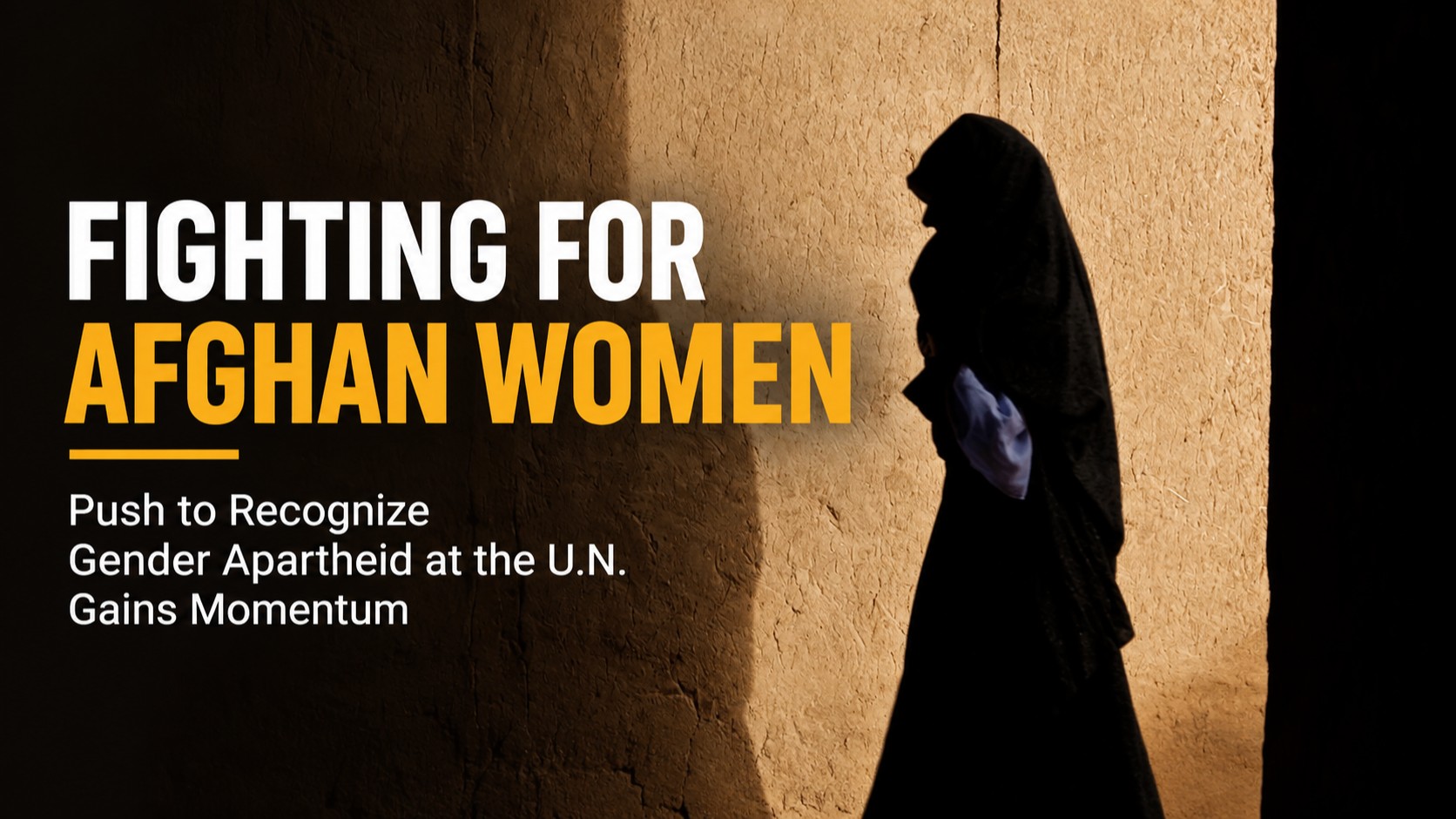
The Kabul Tribune (KT) — The campaign to have gender apartheid recognized under international law is gaining momentum as United Nations member states negotiate a proposed treaty on crimes against humanity, according to the Feminist Majority Foundation.
The advocacy group said recent negotiations over the
proposed treaty have created an opportunity to formally recognize and punish
systematic gender-based persecution, including the oppression of women and
girls in Afghanistan under Taliban rule.
The U.N. released an updated version of draft articles for
the proposed convention on July 28, incorporating amendments and additions that
would recognize gender apartheid throughout the text, the foundation said.
Australia, Afghanistan’s mission to the United Nations,
Iceland, Mexico, Timor-Leste, Uruguay and Spain agreed in June to propose
amendments addressing gender apartheid, according to the Feminist Majority
Foundation. The group said those countries joined Austria, Portugal, Malta, the
Philippines, Chile, Brazil and Luxembourg in supporting efforts to advance
recognition of gender apartheid.
The proposed convention is being negotiated as part of a
broader U.N. process aimed at establishing a treaty that would provide a legal
framework for identifying and prosecuting crimes against humanity.
Several countries have also proposed recognizing forced
marriage as a separate category of crime. Canada, the Netherlands, Sierra
Leone, Germany, Belgium, Colombia, Britain, Andorra, Cyprus, Ukraine and Poland
have supported amendments on the issue, according to the advocacy group.
Some of those countries, along with Nordic states, have also
backed proposals to expand the definition of sexual violence to include forms
of reproductive violence, such as forced sterilization and forced birth.
The Feminist Majority Foundation said the proposals
represent progress but urged more countries to support explicit recognition of
gender apartheid.
Advocates have increasingly used the term to describe what
they say is the systematic exclusion of Afghan women and girls from education,
employment and public life since the Taliban returned to power in Afghanistan
in 2021.
The Taliban has rejected international criticism of its
restrictions on women and girls and says its policies are consistent with its
interpretation of Islamic law.
The Feminist Majority Foundation said it would continue to
press U.N. member states to ensure that the proposed crimes against humanity
convention recognizes gender apartheid and reflects the experiences of Afghan
women and girls.
The group also urged governments not to normalize or
recognize the Taliban while continuing efforts to address what advocates
describe as the systematic oppression of women and girls in Afghanistan.
Negotiations on the proposed convention are expected to
continue as U.N. member states work toward developing a new international legal
instrument on crimes against humanity.







