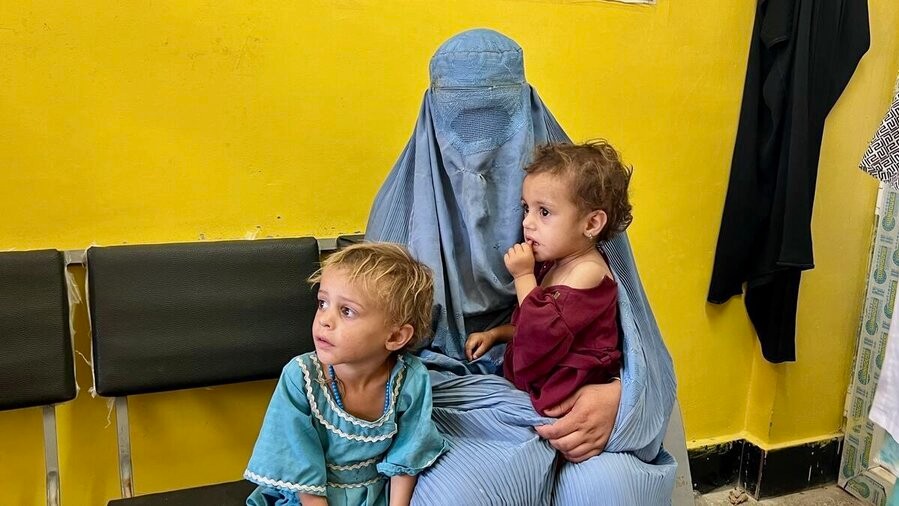
The Kabul Tribune (KT)— An estimated 3.7 million Afghan children under the age of 5 are expected to face acute malnutrition in 2026, underscoring one of the world’s most severe nutrition crises despite decades of humanitarian assistance, according to the Food and Agriculture Organization of the United Nations.
The Integrated Food Security Phase Classification, or IPC,
acute malnutrition analysis for June 2025 through May 2026 estimates that 3.7
million children between 6 and 59 months old will face acute malnutrition this
year.
The analysis said that while humanitarian assistance and
efforts to improve household food security have expanded over the years,
increased food availability has not consistently resulted in improved
nutritional outcomes for young children.
It said the findings suggest that food availability alone is
insufficient to prevent acute malnutrition.
Current nutrition programs in Afghanistan largely focus on
treating acute malnutrition and its immediate causes, the analysis said. But it
added that preventing malnutrition requires greater investment in addressing
the underlying factors that cause children to become malnourished and
contribute to repeated relapses after recovery.
Those factors can vary by season and include access to food
and income from agriculture and livestock, women’s roles and workloads, and
health risks linked to the relationship between children, food, animals and the
environment.
The analysis said a better understanding of how these
factors interact is essential for developing effective strategies to prevent
child malnutrition and break the cycle of repeated illness and recovery.







