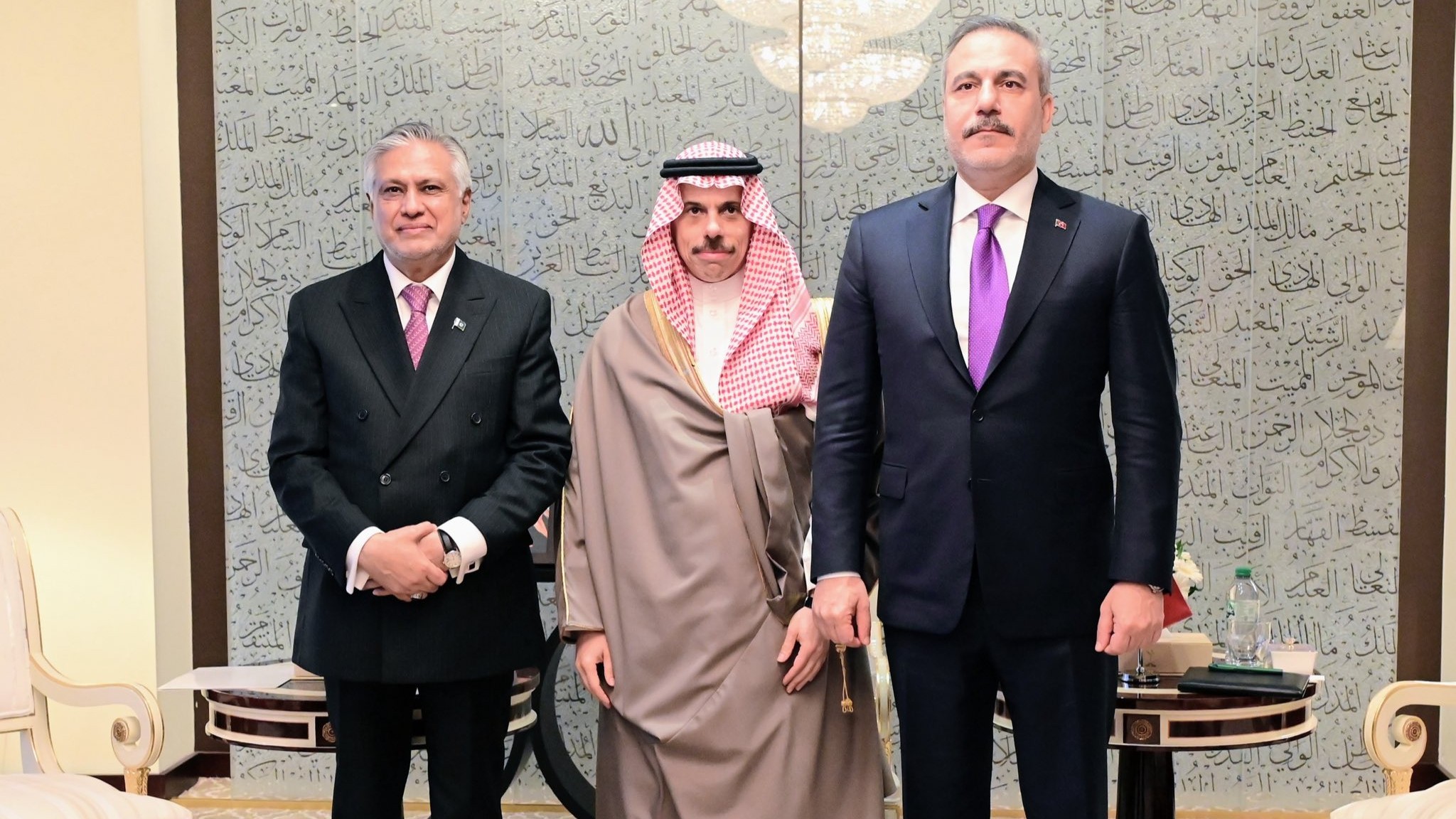
The Kabul Tribune (KT)— The foreign ministers of Pakistan, Saudi Arabia and Türkiye met on the sidelines of the U.N. General Assembly to discuss regional and international security issues amid escalating attacks by Yemen’s Houthi rebels against Saudi Arabia.
Pakistan’s Deputy Prime Minister and Foreign Minister Ishaq
Dar, Saudi Foreign Minister Prince Faisal bin Farhan Al Saud and Turkish
Foreign Minister Hakan Fidan met Thursday under the framework of the Makkah
Joint Defense Agreement, according to Saudi and Pakistani officials.
Dar said in a post on X that the ministers also reviewed
progress toward establishing the institutional structures of the agreement.
The meeting came as Saudi Arabia reported a new wave of
Houthi attacks. Saudi authorities said they intercepted six ballistic missiles
launched toward the kingdom on Thursday, while the Houthis claimed to have
launched missile and drone attacks against Saudi targets.
Saudi Arabia has issued emergency alerts in several areas,
including Makkah, Jeddah and Yanbu, amid the attacks.
The Saudi Foreign Ministry said the three countries
condemned attacks targeting Makkah and other civilian sites and affirmed Saudi
Arabia’s right to defend itself.
The ministers also discussed arrangements for an urgent
meeting of the three countries’ military chiefs to consider ways to support
Saudi Arabia under the Makkah Joint Defense Agreement. The pact stipulates that
an armed attack against any one of its members is considered an attack against
all three.
The agreement was signed by Pakistan, Saudi Arabia and
Türkiye in August as the three countries sought to strengthen defense
cooperation and collective deterrence. The countries have since been working to
establish the agreement’s institutional structures and mechanisms.
The latest meeting comes amid an escalation in fighting
involving the Houthis in Yemen and attacks affecting Saudi territory and energy
infrastructure. The developments have also raised concerns about wider regional
security and disruptions to shipping and energy supplies.







