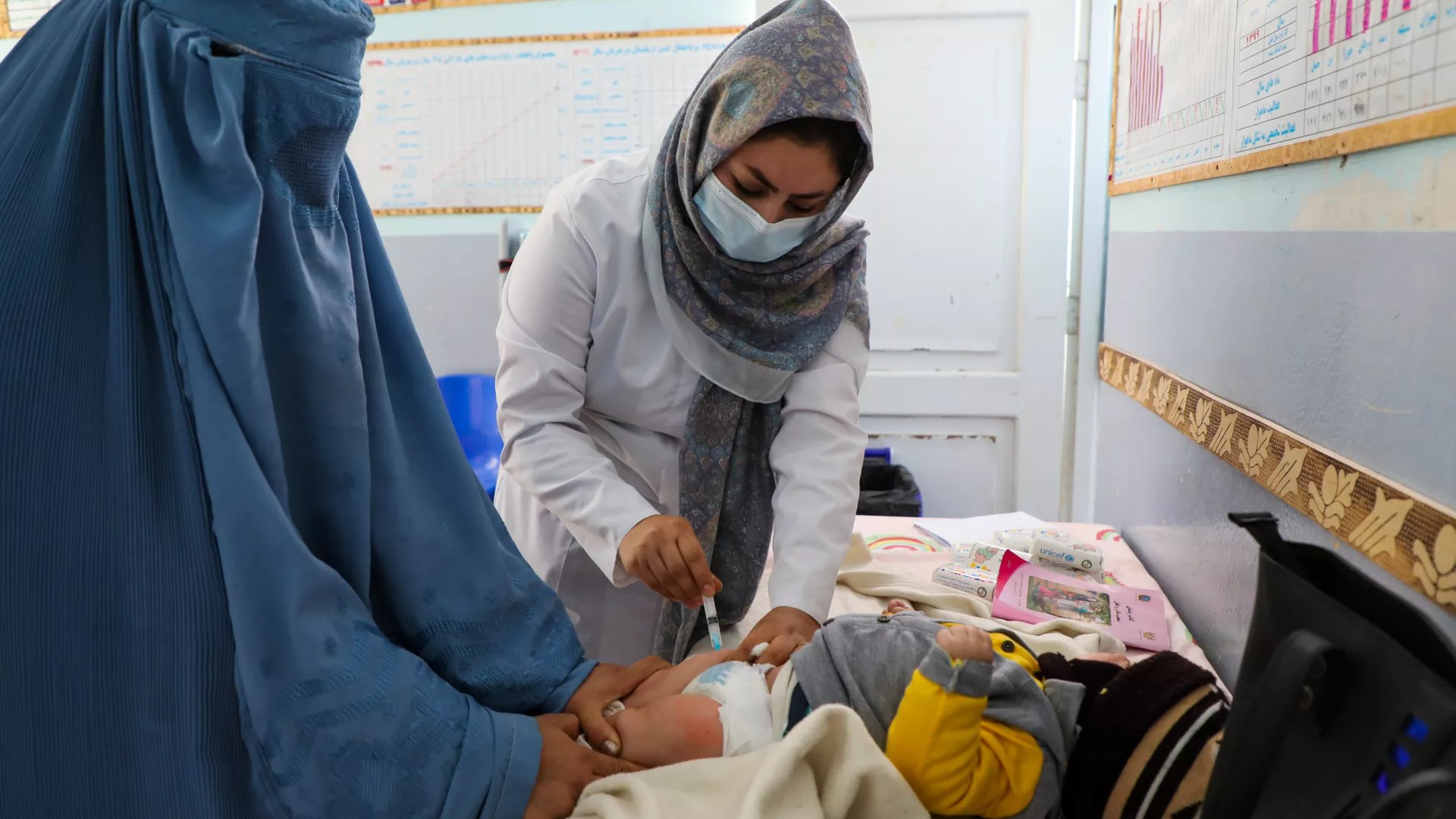
The Kabul Tribune (KT) — Afghanistan remains vulnerable to renewed measles outbreaks despite a sharp decline in cases following a nationwide vaccination campaign in late 2025, with uneven routine immunization leaving many children unprotected, the Afghanistan Analysts Network said in a new report.
The report, published Sept. 28, is based on 12 interviews
conducted in 2025 and 2026 with doctors, health workers and parents in several
Afghan provinces. It examined the major measles outbreak in 2024-25, the
pressure it placed on hospitals and families, and the decline in cases in parts
of the country in 2026.
According to AAN, the latest outbreak was the most serious
in Afghanistan since 2001. The World Health Organization recorded 97,368
suspected measles cases and 552 associated deaths by Dec. 13, 2025.
The report said cases declined substantially after a
nationwide vaccination campaign in late 2025 reached more than 16.7 million
children between 6 months and 10 years of age.
By Aug. 29, 2026, Afghanistan's national surveillance system
had recorded 18,826 suspected measles cases and 78 deaths. Children under 5
accounted for 14,367 of those cases, or about 76%, according to the report.
The decline, however, has not been uniform.
In Farah province, a doctor interviewed by AAN said severe
cases had fallen to an average of about three admissions a day, with some days
recording only one. In Faryab, a doctor reported one or two cases a month,
while in Badakhshan, a doctor said the hospital was admitting up to six measles
patients a week, with cases generally less complicated than the previous year.
Helmand province was an exception. A doctor at Boost Hospital
told AAN that there had been little improvement compared with 2025 and that the
measles ward remained full much of the time.
The report said the underlying problem was continued gaps in
routine immunization, particularly in remote and poor communities.
Afghanistan has experienced repeated measles outbreaks for
more than two decades. AAN said the pattern has largely reflected the country's
inability to maintain sufficiently broad and consistent routine childhood
immunization, with access to health services, poverty, illiteracy, malnutrition
and other factors contributing to the problem.
The 2024-25 outbreak placed severe pressure on hospitals. In
Badakhshan, a doctor at Faizabad Hospital told AAN that the facility was
admitting 50 to 60 measles patients a day at the height of the outbreak,
compared with no more than six a day in 2024.
The hospital's children's ward had 30 beds but at times was
caring for as many as 180 children, forcing several patients to share beds and
staff to use corridors and even a kitchen as a temporary ward, according to the
report.
Doctors in Helmand and Farah described similar overcrowding
and shortages. One doctor in Helmand said he sometimes treated around 10
members of a single family who had contracted measles.
The report also highlighted the role of malnutrition. A
doctor in Helmand said about eight of every 20 children admitted with measles
were malnourished. Pneumonia and dehydration were among the complications
associated with deaths.
Parents interviewed by AAN described multiple children in
the same families becoming infected.
One father in Faizabad, identified as Muqem, said all three
of his children contracted measles in May 2025. He said eight children in his
extended family became infected one after another, while the only child who did
not contract the disease was the one the family knew had received both vaccine
doses.
In Farah, a mother identified as Razia said her 8-month-old
daughter contracted measles before receiving her first vaccination. The child
became critically ill and spent eight days in hospital, according to AAN.
The report said doctors consistently identified vaccination
gaps as a major factor behind the scale of the outbreak. Many children treated
during the outbreak had no record of receiving a measles vaccine, particularly
those from remote areas.
Health workers also described difficulties reaching isolated
communities. In Badakhshan, areas such as Wakhan, the Pamir and parts of Darwaz
were difficult for vaccination teams to access.
AAN also reported concerns raised by some doctors about
vaccine transportation, storage and administration in remote areas, including
possible disruptions to the cold chain. The report stressed, however, that
there was no evidence confirming that cold-chain failures caused the recent
measles outbreak.
Afghanistan's vaccination coverage has historically remained
below the level considered necessary to prevent measles outbreaks. The report
cited the 2022-23 Multiple Indicator Cluster Survey, which found that about 51%
of children had received a first dose of a measles-containing vaccine and only
37% had received the second recommended dose.
The report noted that around 95% two-dose coverage is
considered necessary to prevent outbreaks of highly contagious measles.
AAN said the country's repeated reliance on large emergency
vaccination campaigns has helped reduce outbreaks but has not addressed
weaknesses in routine immunization.
The report said a 2026 study published in the journal Vaccine
similarly concluded that controlling measles in Afghanistan would require
sustained two-dose routine vaccination, targeted supplementary campaigns in
vulnerable areas and restoration of the broader routine immunization system.
AAN also pointed to wider pressures on Afghanistan's health
system, including reductions in international aid, shortages of health workers
and limited access to health facilities, particularly in rural areas.
Despite the decline in measles cases in 2026, the report
concluded that Afghanistan remains vulnerable to renewed outbreaks unless
routine two-dose vaccination reaches substantially more children across the
country.
The report said periodic mass campaigns can reduce
transmission, but that long-term control of measles depends on ensuring
children receive routine vaccinations before outbreaks occur.







