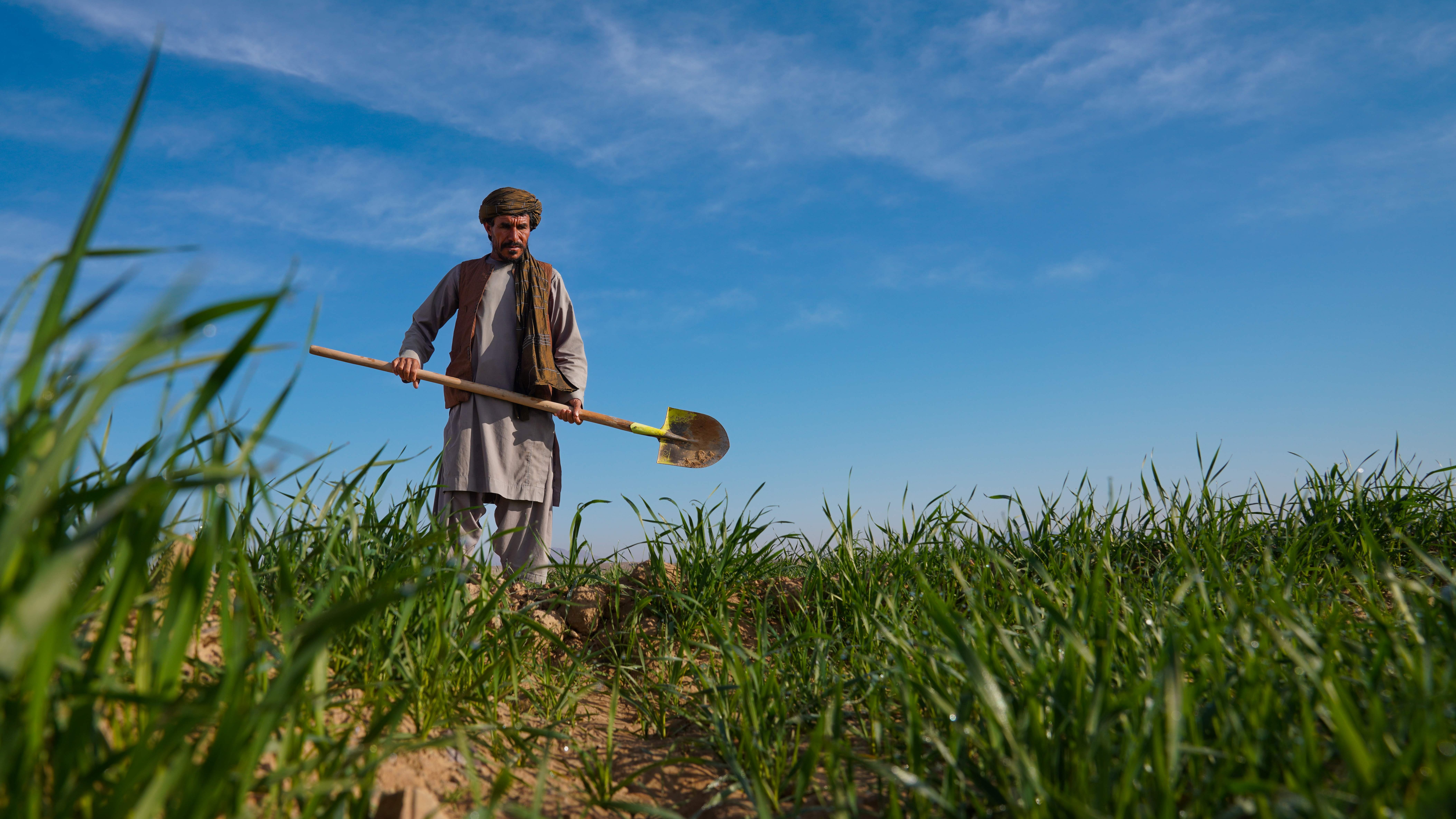
The Kabul Tribune (KT) — Rising fertilizer and fuel prices, higher transport costs and difficulties accessing agricultural inputs are putting pressure on Afghan farmers ahead of the country’s critical winter wheat planting season, according to a new analysis by the Food and Agriculture Organization of the United Nations.
FAO said its latest Data in Emergencies Monitoring household
survey, conducted from April 26 to May 31, found that access to fertilizer was
the second most frequently reported constraint on crop production in
Afghanistan.
Farm households that reported difficulty obtaining
fertilizer were more likely to reduce the area they planted, borrow money to
finance agricultural inputs and expect lower crop production, FAO said.
The agency combined data from the latest monitoring round
with more recent information to assess the impact of fertilizer prices and
access to inputs between April and August and the implications for the
October-December planting season.
FAO said the October-December wheat planting period represents
a critical window for intervention because of the strong link between crop
performance and food security.
The agency also warned that the ongoing crisis in the Strait
of Hormuz has contributed to higher global fertilizer prices. Urea prices in Afghanistan
were 49% higher than the same period last year, while prices for diammonium
phosphate, or DAP, were 17% higher.
Urea is generally applied later in the crop cycle as a
source of nitrogen, while DAP is mainly used at planting to provide phosphorus
needed for early crop development. Cereals account for about 72% of
Afghanistan’s fertilizer demand, with winter wheat alone accounting for 61% of
national fertilizer use.
Fuel prices have also risen. Diesel prices increased 5.3% in
mid-July and remained 15% above last year’s level and 18% above the three-year
average, according to data cited by FAO.
Higher transport, import and insurance costs have added to
the pressure on farmers and consumers. Wheat grain prices were 12% higher than
a year earlier, while high-price and low-price flour were 7% and 11% higher,
respectively.
Rice prices also remained elevated, with high-price rice 26%
more expensive than a year earlier and low-price rice 33% higher.
FAO said previous monitoring rounds found that food costs were
more strongly associated with household food insecurity than natural hazards. A
larger share of rural households also reported rising fuel and food costs as
shocks affecting their livelihoods.
Livestock and labor markets are also under pressure. The price
of a one-year-old female sheep was 6% below last year’s level and 3% below the
three-year average, while labor market conditions remained about 15% below both
levels, pointing to continued pressure on household incomes.
FAO said the expected arrival of El Niño in 2027 could
generally benefit crops in Afghanistan, although risks such as waterlogging and
flooding remain. However, the agency warned that continued high fertilizer
prices and limited access to agricultural inputs could reduce those potential
benefits.







