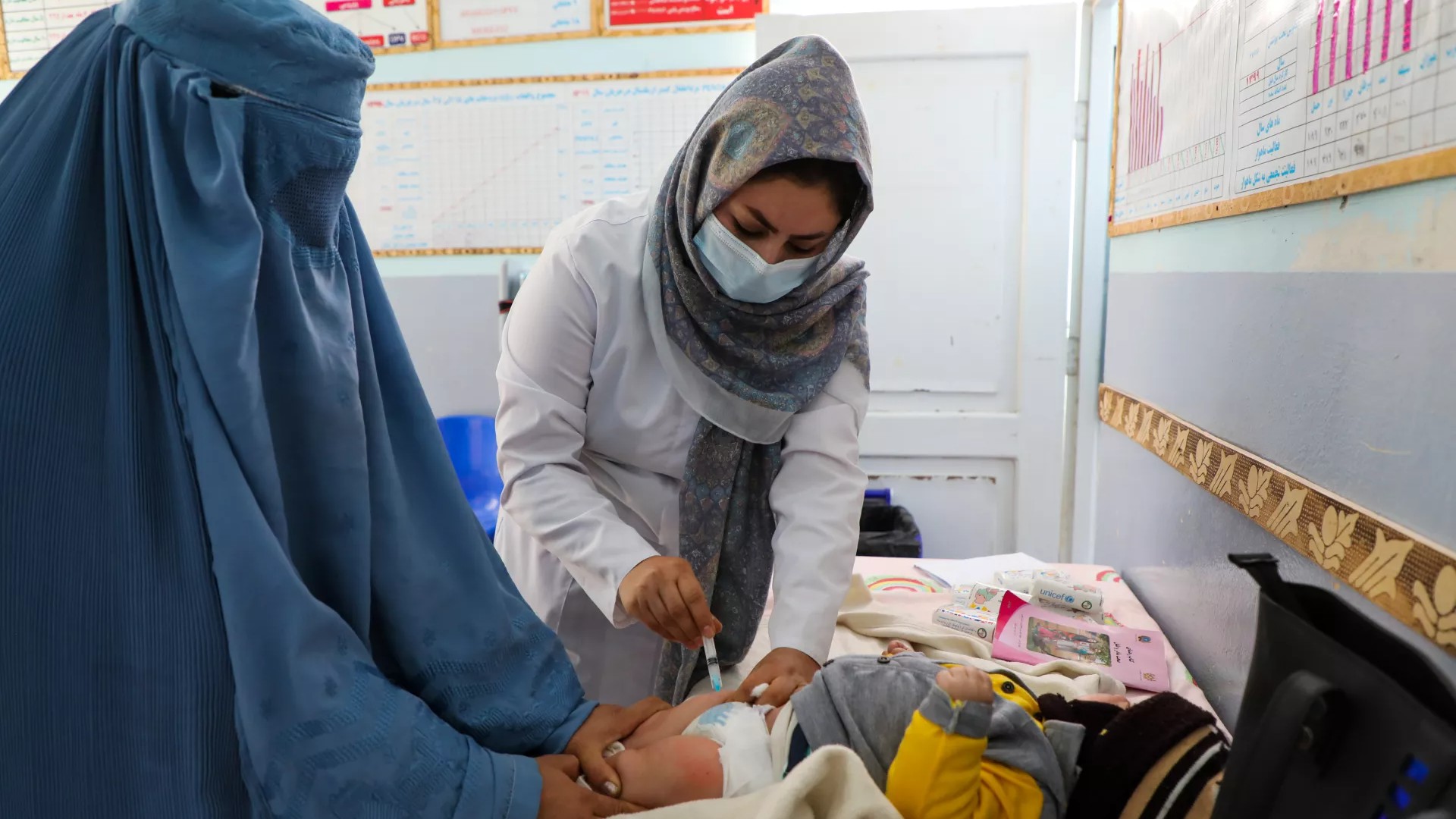
The Kabul Tribune (KT) — A 38-year-old mother in Kabul faced repeated obstacles in obtaining medical care during her latest pregnancy, including the cost of treatment, limited services at a nearby clinic and difficulties arranging transportation and a male relative to accompany her, according to an account published by the Afghanistan Analysts Network.
The woman, identified by AAN as Zarghuna, eventually
underwent a Caesarean section at a government hospital after her condition
deteriorated during pregnancy. Her account provides a personal look at some of
the challenges facing women seeking maternal health care in Afghanistan, where
poverty, gaps in health services and restrictions affecting women's mobility
can make routine medical care difficult to access.
According to AAN, Zarghuna lives with her four children in
Kabul's Deh Sabz district. Her husband, a former private-school teacher, left
Afghanistan for work and was unable to return after losing his passport and
Afghan identification documents.
During the early months of her pregnancy, Zarghuna said she
began experiencing weakness, dizziness and persistent thirst. When she went to
a nearby clinic, she was told there was no longer a midwife available there and
that she would need to travel to central Kabul to see a gynecologist.
A doctor who examined her found that she was severely anemic
and that the level of amniotic fluid around the baby was low, according to her
account to AAN. The doctor advised her to return each month for monitoring.
But regular visits were difficult to arrange. Zarghuna said
she needed money for transportation and medical expenses and also had to find a
male relative to accompany her. Her brother-in-law was the only nearby relative
able to help, but he had his own family and work responsibilities.
As a result, she did not return to the doctor until she was
seven months pregnant, AAN reported.
By then, she was suffering from severe weakness, nausea and
dehydration. The doctor prescribed medication, injections and intravenous
fluids and warned that complications during delivery were possible.
Because her family could no longer afford private treatment,
Zarghuna decided to give birth at a government hospital. She told AAN that a
Caesarean section at a private hospital could cost between 20,000 and 30,000
afghanis, a sum she could not afford.
When labor began, relatives took her to a government
hospital in Kabul. She said she experienced a lengthy wait before receiving
treatment and was eventually told that she needed an emergency Caesarean
section because of prolonged labor and concerns for the baby.
She underwent the operation and remained hospitalized for
two days before returning home with her newborn.
A broader health challenge
Zarghuna's experience is not evidence that every Afghan
woman faces the same circumstances, but it comes amid continuing concerns about
access to maternal and reproductive health care in Afghanistan.
The World Health Organization says Afghanistan has made
progress in maternal health over the past two decades, but maternal mortality
remains among the highest in the world. The estimated maternal mortality ratio
is 521 deaths per 100,000 live births.
The country's health system also continues to face shortages
of health workers, funding and essential services. The WHO Health Cluster has
reported disruptions to health services following the closure of hundreds of
health facilities, affecting millions of people, including women requiring
maternal health care.
U.N. reporting has also raised concerns about restrictions
affecting women's access to health services. Restrictions on movement and
requirements for women to be accompanied by a mahram, or close male relative,
can make it harder for some women to travel to medical facilities, particularly
when services are far from home.
The suspension of women's medical education has added
another concern. U.N. officials have warned that restrictions on the education
of women and girls could further reduce the number of female health
professionals available to provide care to Afghan women.
Afghanistan's economic difficulties have compounded those
problems. Families with limited incomes may struggle to pay for transportation,
medicines, diagnostic tests and private medical treatment, while government
facilities have also faced pressure from growing demand.
For Zarghuna, the difficulties were compounded by her
husband's absence and the responsibility of caring for her children while
trying to continue earning money by teaching neighborhood girls.
In her account to AAN, she said that obtaining medical care
repeatedly required her to find someone to accompany her, arrange
transportation and borrow money for treatment.
She ultimately returned home with her baby safely delivered,
but said she continued to wonder whether her pregnancy might have ended
differently if medical care had been easier to reach.
Source: Afghanistan Analysts Network, with additional
health-system context from U.N. and World Health Organization reporting.







