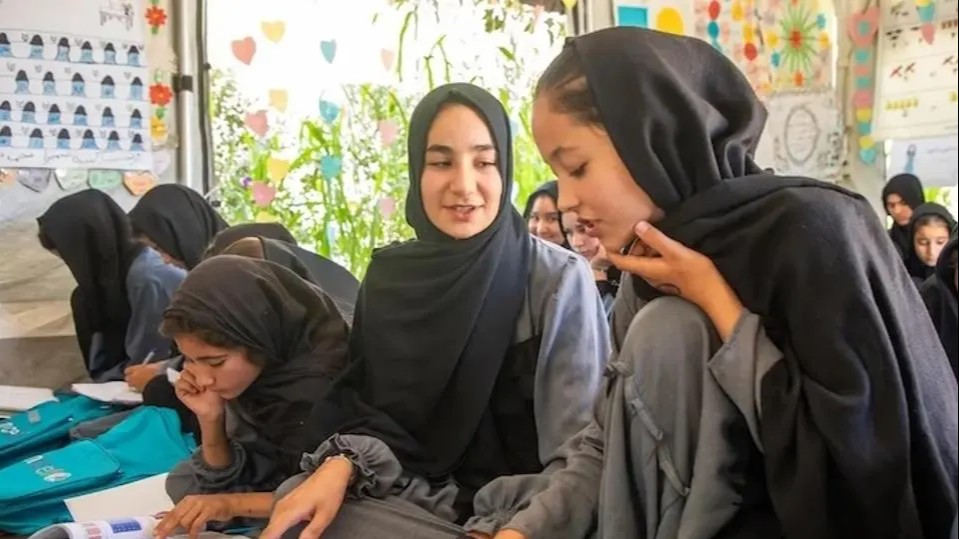
The Kabul Tribune (KT) — Continued restrictions on girls’ education and women’s participation in the workforce are undermining Afghanistan’s economy and social stability, Forbes reported, citing a new analysis by UNICEF.
The report, published by UNICEF’s Office of Research –
Innocenti, said limiting access to secondary education for girls and
restricting women’s employment are weakening the country’s human capital and
could have long-term consequences for economic growth and public services.
According to the analysis, banning girls from education
beyond sixth grade has already contributed to an estimated 0.5% decline in
Afghanistan’s gross domestic product. The report warned that each year the
restrictions continue will prevent more girls from entering the skilled
workforce.
The findings highlight broader social impacts, including
potential increases in child malnutrition, reduced vaccination coverage and
declining access to maternal health care, due to the strong link between
women’s education and family health outcomes.
Since the Taliban returned to power in 2021, no girls have
been allowed to attend school beyond primary level, affecting an estimated one
million girls. If the policy continues, up to two million girls could be
deprived of secondary education by 2030, the report said.
The study also warned that around 600,000 skilled women
could leave the workforce over the next decades, further weakening key sectors
such as education and health care, where female professionals are essential.
UNICEF urged the Taliban to lift restrictions on girls’
secondary and higher education and to allow women to participate in the labor
market, saying such measures could boost economic growth and improve social
outcomes.
Afghanistan continues to face a severe humanitarian crisis,
with nearly half of the population expected to require assistance in 2026.
Ongoing drought, natural disasters and the return of millions of migrants have
added pressure on already strained public services.
The report also noted that many universities in Afghanistan
are at risk of closure due to declining enrollment and reduced resources,
particularly among female students and teachers.
Despite the challenges, UNICEF said it continues to support
community-based education and skills training programs, providing alternative
learning opportunities for hundreds of thousands of children, including girls.
The agency emphasized that expanding access to education
remains critical for Afghanistan’s long-term stability and development.