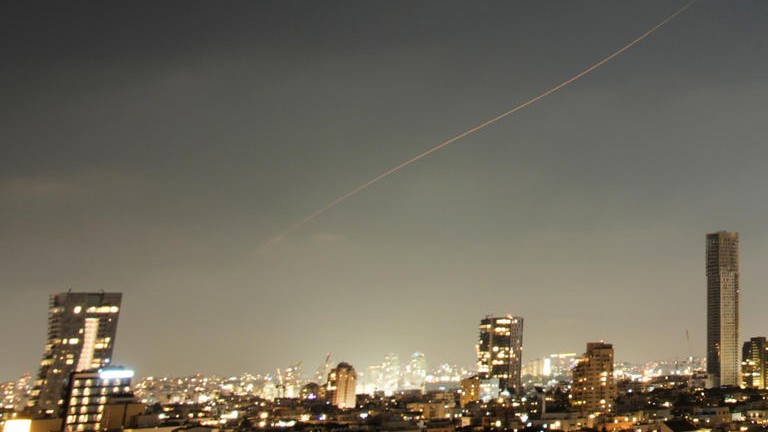
The Kabul Tribune (KT) — Israel launched airstrikes early Monday targeting central and western Iran in response to missile fire from Tehran, the Associated Press (AP) reported, in an escalation that risks reigniting a broader regional conflict in the Middle East.
Iranian state television reported explosions in several
cities, including Isfahan, Karaj, Tabriz and Tehran, without providing
immediate details. A witness in Tehran said at least one large blast was heard
west of the capital. Following the strikes, Iran closed the airspace around
Imam Khomeini International Airport.
Iranian officials did not disclose what sites were hit or
the extent of the damage. However, Iran’s paramilitary Revolutionary Guard said
Israel used air-launched ballistic missiles in the attack, without further
elaboration.
The Israeli military confirmed the strikes in a brief
statement, saying its air force had targeted military sites belonging to what
it described as the Iranian regime in western and central parts of the country.
No additional details were provided.
The White House did not immediately respond to inquiries
about whether the strikes were coordinated with the United States.
Meanwhile, Saudi Arabia activated missile alert sirens
Monday morning in the Al Kharj governorate, where Prince Sultan Air Base —
hosting U.S. forces — is located. Saudi state media later reported that the
missile threat had passed without further explanation.
According to AP, tensions have been mounting for days as
negotiations between Iran and the United States over a fragile ceasefire
remained stalled, amid ongoing clashes between Israel and Hezbollah in Lebanon.
On Sunday, Israel carried out airstrikes in Beirut’s
southern suburbs. Iran responded with missile attacks on Israel, which preceded
Monday’s Israeli strikes on Iranian territory.
U.S. President Donald Trump told Fox News earlier that he
wanted Iran to halt missile attacks and return to negotiations. He also said
Israel’s earlier strikes in Lebanon were not coordinated with Washington and
expressed dissatisfaction.
A senior U.S. official told AP that Trump had urged Israeli
Prime Minister Benjamin Netanyahu not to immediately retaliate following Iran’s
missile attack, suggesting efforts were made to delay escalation.
In a separate interview with the Financial Times prior to
the strikes, Trump said he was directing how the conflict should proceed,
stating that Netanyahu would have limited options.