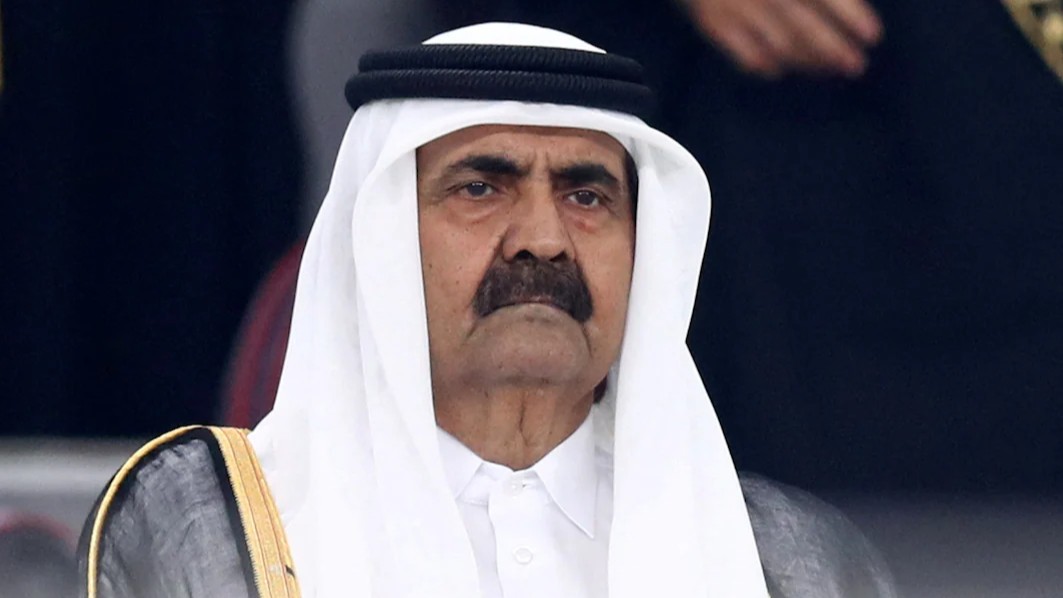
The Kabul Tribune (KT) — Al Jazeera has reported that former Qatari Emir Sheikh Hamad bin Khalifa Al Thani, who led the country's transformation into a major regional and global power, has died at the age of 74.
According to Qatar's Amiri Diwan and the state-run Qatar News Agency (QNA), Sheikh Hamad died on July 12, although no cause of death was disclosed.
Sheikh Hamad ruled Qatar from 1995 to June 2013, when he voluntarily transferred power to his son, Emir Sheikh Tamim bin Hamad Al Thani. The handover was widely regarded as one of the first voluntary transfers of power by a Gulf ruler in the modern era.
Al Jazeera reported that Qatar underwent rapid economic growth during Sheikh Hamad's 18-year rule, fueled largely by the expansion of the country's liquefied natural gas industry. His government invested heavily in infrastructure, promoted economic diversification, and expanded Qatar's international financial presence through the Qatar Investment Authority and other state-backed initiatives.
During his tenure, Sheikh Hamad also oversaw the growth of Al Jazeera, the Doha-based satellite broadcaster that became one of the most influential Arabic-language news organizations in the world, significantly enhancing Qatar's global profile.
Under his leadership, Qatar pursued a more active foreign policy and positioned itself as a mediator in regional conflicts and diplomatic negotiations. Doha later played a significant role in international engagement on Afghanistan by hosting negotiations and facilitating humanitarian and diplomatic contacts.
His rule also laid the groundwork for Qatar's successful bid to host the 2022 FIFA World Cup, the first World Cup held in the Middle East. The tournament reflected years of investment in infrastructure and international outreach initiated during his administration.
Al Jazeera noted that Sheikh Hamad's foreign policy drew criticism from some neighboring countries and Western governments over Qatar's relations with Iran, Hamas, and the Muslim Brotherhood. Qatari officials, however, maintained that engagement with a broad range of regional actors supported the country's independent foreign policy and mediation efforts.
Sheikh Hamad is widely regarded as the architect of modern Qatar, having transformed the Gulf state into a significant diplomatic, economic, and media power with influence extending far beyond the region.







