The Kabul Tribune (KT) — Women and girls in Afghanistan are facing worsening restrictions, poverty and limited access to education and basic services, according to Save the Children, which has worked in the country since 1976.
The organization says years of conflict, economic hardship, the COVID-19 pandemic and a growing hunger crisis have placed particular pressure on women and children. Since the Taliban returned to power in August 2021, restrictions on women and girls have further limited their access to education and employment.
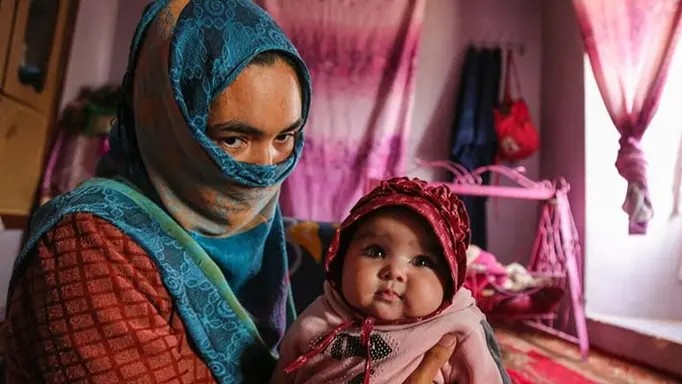
Save the Children says the country's struggling health care system is also leaving pregnant women, new mothers and newborns with limited access to medical care.
The organization said that since the Taliban takeover on Aug. 15, 2021, two babies have been born every minute in Afghanistan. It warned that hundreds of thousands of infants and mothers face difficulties obtaining health services.
Economic hardship has also pushed some families toward child labor and early marriage, according to Save the Children.
The organization said as many as one-fifth of Afghan families have been forced to send children to work as household incomes have fallen. It estimated that about 1 million children are engaged in child labor.
For girls, the loss of access to education has compounded those economic pressures.
Damsa, a girl whose age and location were not provided by Save the Children, said she was devastated when security concerns temporarily forced her class to close. Her parents helped her continue studying at home until a Save the Children community-based education program reopened.
“I love my class and classmates,” Damsa said.
When classes resumed, she said she was so excited to return that she could not sleep the night before.
“I want to be a doctor in the future to help my people,” she said.
Other girls have been pushed into work to help their families survive.
Laila, who lives with her mother and four siblings in a displacement camp in northern Afghanistan, previously spent her days cleaning houses. According to Save the Children, her family fled their home in Sar-e Pol province after her father was killed in the conflict and her mother faced pressure to remarry.
There are no schools in the camp, the organization said. Laila now attends a Save the Children child-friendly space, where she can learn and play with other children.
Before the center opened, Laila said she worked from morning until evening and earned as little as 10 Afghanis a day, or about 10 cents.
“When I worked in people’s houses, it was very hard,” she said. “I worked because I had to.”
Her mother, Shugofa, described the difficulty of watching her daughter work to help support the family.
“How can I feel when a piece of my heart goes out and works for others?” she said. “But what could I do?”
Shugofa said the family sometimes eats only once a day. On other days, she said, they survive on bread.
“My children are weak and skinny,” she said.
Save the Children said it is providing vulnerable families with cash assistance and winter supplies, along with education and child-protection programs. The organization says the assistance is intended to help families avoid coping strategies such as child labor, early marriage and reducing meals.
The group said some girls have regained access to secondary education in certain provinces, but it called for broader access to secondary and higher education.
Save the Children said the continued exclusion of women and girls from education and employment could have long-term consequences for Afghanistan's economic and social development.
For girls such as Damsa, however, education remains closely tied to hopes for the future.
Her ambition is simple: to become a doctor and help others in her country.