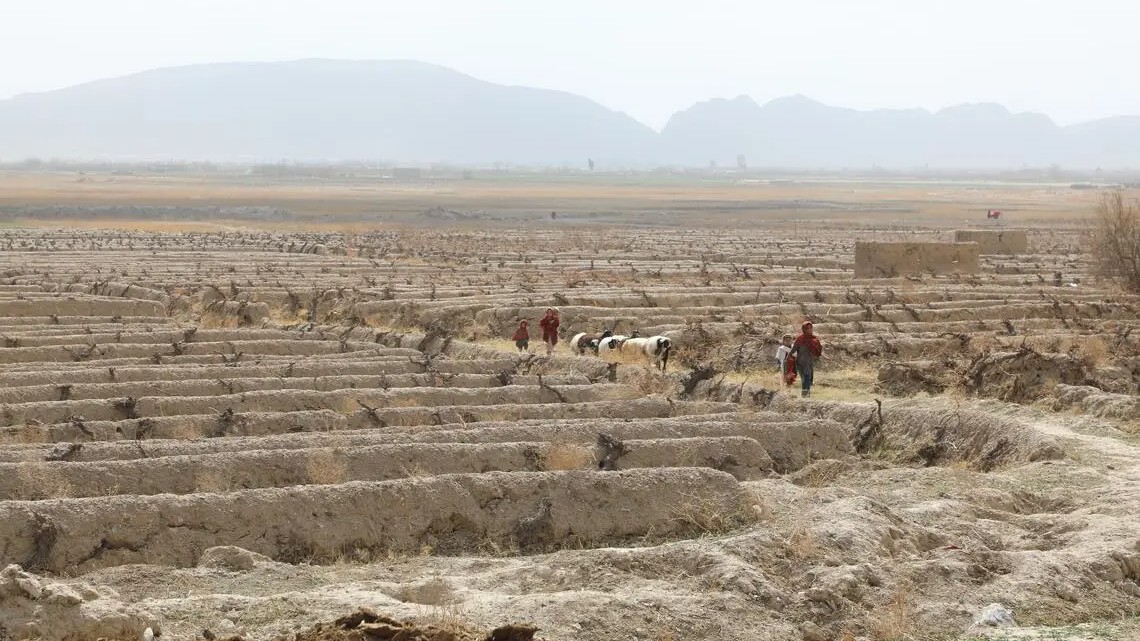
The Kabul Tribune (KT) — Economic pressures, food insecurity and natural hazards have emerged as the primary drivers of internal population movements in Afghanistan as conflict-related displacement has declined since 2021, according to data released in September 2026.
Around 3.1 million Afghans were living in internal
displacement in 2025, reflecting the continuing impact of economic hardship,
humanitarian needs and natural disasters on communities across the country.
According to REACH, The changing pattern of displacement comes as conflict
activity has decreased since the Taliban seized power in 2021. For many
Afghans, economic survival, access to food and basic services, and exposure to
natural hazards are now key factors influencing decisions about whether — and
where — to move.
But displacement is not the only concern.
For Afghanistan's poorest households, being unable to move
can also have serious consequences. So-called forced immobility occurs when
families lack the financial or other resources needed to leave their homes,
even when moving elsewhere might offer greater safety, services or livelihood
opportunities.
Women are among those particularly affected by forced
immobility, according to the findings.
Most movement remains within provinces
The data show that most internal movements took place within
provincial boundaries rather than between provinces.
Social connections played the most important role in
determining where people moved. Families often chose destinations where they
already had relatives, friends or other community ties, providing a support
network in unfamiliar or economically difficult circumstances.
Many households also moved toward economic centers, where
they could find better access to services and greater opportunities for work
and income.
The movement toward urban and economic centers highlights
the close relationship between displacement and Afghanistan's worsening
economic pressures. For families struggling to meet basic needs, relocation can
be a strategy for finding employment, accessing services or reducing vulnerability.
Involuntary movers face economic pressures
Households that moved involuntarily were more likely to
depend on less stable sources of income and faced higher rental costs, the data
show.
Despite these economic difficulties, however, their
humanitarian needs were not clearly more severe across most sectors than those
of households that had not moved involuntarily.
The findings point to a complex picture of displacement in
Afghanistan, where moving can create significant financial pressures while
remaining in place can also leave vulnerable families without viable options.
For millions of Afghans, population movement is therefore
not simply a consequence of conflict. It is increasingly shaped by the broader
struggle to find food, income, housing, safety and access to essential services
in a country facing persistent economic and humanitarian challenges.