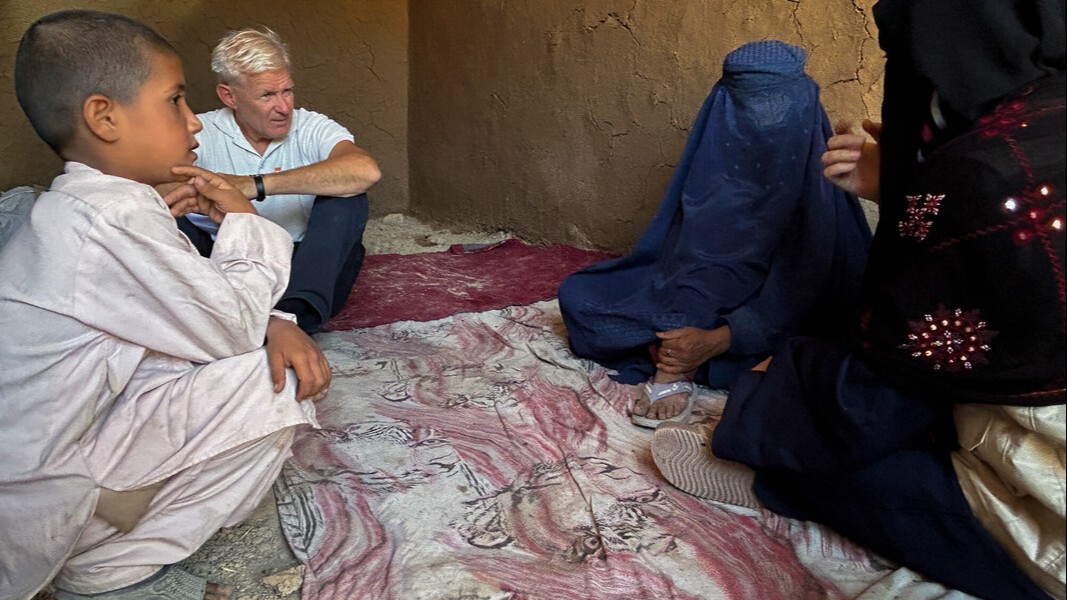
The Kabul Tribune (KT) — Jan Egeland, head of the Norwegian Refugee Council, criticized countries on Thursday for demanding rights for Afghan women and girls while reducing humanitarian assistance to Afghanistan, calling the approach “hypocrisy.”
In an interview with Agence France-Presse (AFP) in Kabul,
Egeland said foreign governments were justified in pressing the Taliban
authorities to allow girls to receive education and women to work, but said
those demands should be accompanied by continued humanitarian support.
“It is hypocrisy” to demand rights for Afghan women from
abroad while cutting aid for food and primary education, Egeland told AFP.
International assistance to Afghanistan has declined sharply
since the Taliban returned to power in 2021. The United Nations said it had
received less than 30% of the funding required for life-saving humanitarian
assistance as of late August.
The humanitarian crisis has also been worsened by natural
disasters and the return of millions of Afghans from Iran and Pakistan since
2023.
UNICEF warned in August that acute malnutrition among
children had reached critical levels this year, affecting about 1 million
children.
Egeland said aid cuts were particularly harmful to women and
girls and rejected the idea that reducing humanitarian assistance could
effectively pressure the Taliban.
“The funding cuts are disastrous for the girls and the women
of Afghanistan,” he told AFP while visiting Norwegian Refugee Council projects
across the country.
The Norwegian Refugee Council employs about 400 people in
Afghanistan, including women, and provides food assistance, education, shelter
and protection services to vulnerable communities.
Egeland said the organization had been forced to lay off
female aid workers and teachers working in primary education for girls because
of funding shortages.
The United Nations has said that about 175 centers providing
services related to gender-based violence closed during the first six months of
the year because of a lack of funding, affecting about 1 million people.
Since returning to power, the Taliban authorities have
barred girls from secondary schools and universities and imposed restrictions
on women's employment and participation in public life.
Afghanistan remains the only country in the world where
girls are barred from education beyond the primary level.
Egeland urged the Taliban authorities to reverse the
restrictions, warning that continued bans on girls' education would have
long-term consequences for the country's health and education systems.
“There will be no skilled Afghan female teachers, nurses,
doctors, midwives in the future,” he said, according to AFP.
He also called on governments in Europe, North America and
elsewhere to reopen their embassies in Afghanistan and engage directly with the
Taliban authorities.
Egeland said such engagement would not necessarily amount to
recognition of the Taliban government. Instead, he urged foreign governments to
engage with the authorities while pressing for women's and girls' rights and
continuing humanitarian assistance.
Russia is currently the only country to have formally
recognized the Taliban government.
“We are on the front lines now of humanity here and we the
humanitarian groups feel utterly alone,” Egeland told AFP.