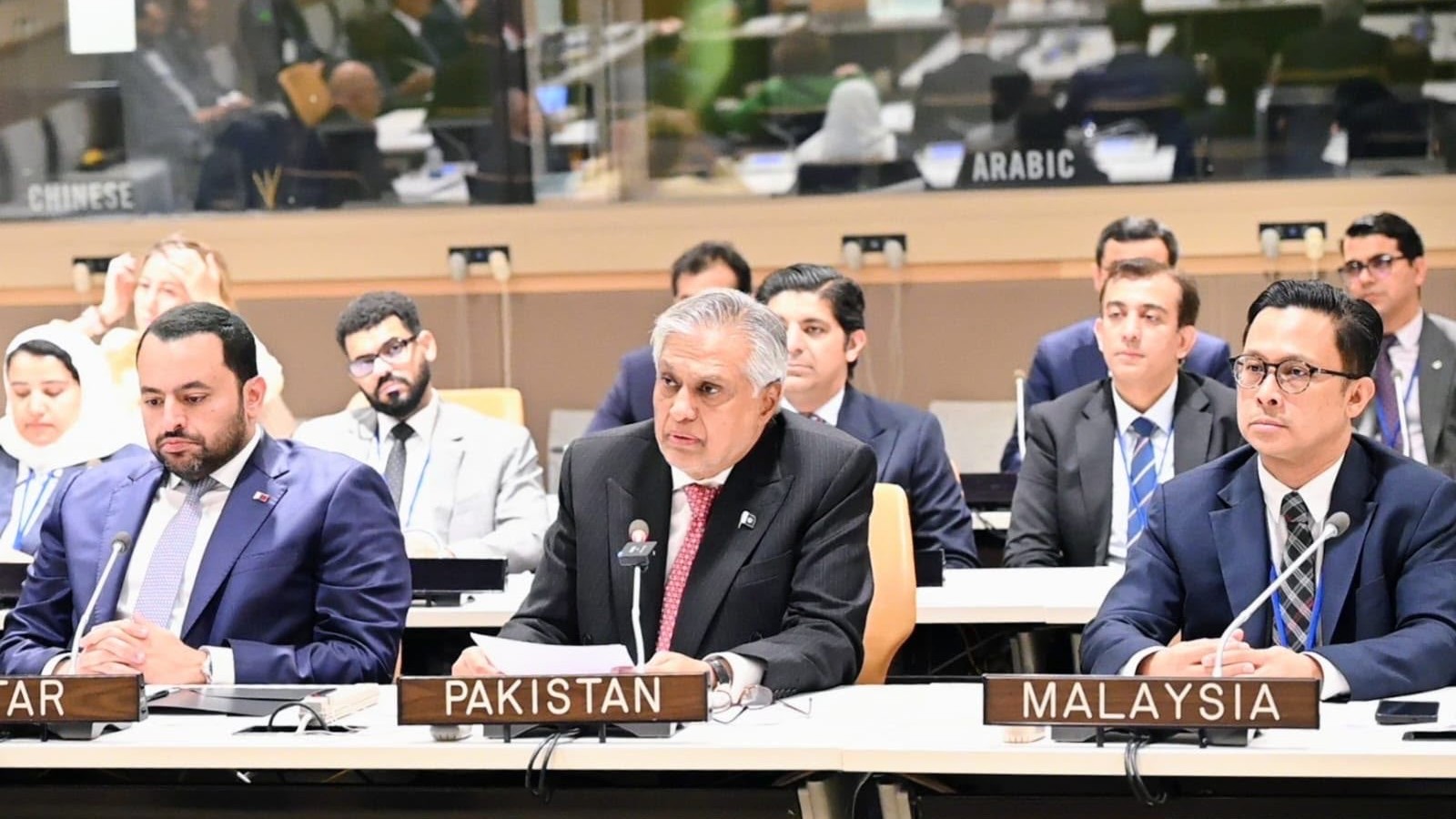
The Kabul Tribune (KT)— Pakistan’s deputy prime minister and foreign minister, Mohammad Ishaq Dar, urged the Taliban to take “concrete and verifiable” steps against militant groups operating from Afghan territory and to lift restrictions on women and girls.
Speaking at a meeting of the Organization of Islamic
Cooperation’s Contact Group on Afghanistan, Dar said Pakistan was “seriously
concerned” about the presence of more than two dozen militant groups in
Afghanistan. He specifically named the Pakistani Taliban, or TTP, the
Balochistan Liberation Army and Majeed Brigade, Islamic State Khorasan,
al-Qaida and the East Turkestan Islamic Movement.
Dar said the groups posed a threat to regional and
international peace and security, and accused them of operating from Afghan
soil with impunity.
“Our law enforcement agencies are making enormous sacrifices
to counter terrorism,” Dar said, adding that Pakistanis continued to be
targeted by militant groups operating from Afghanistan.
He also referred to what he described as a suicide bombing
at a mosque in Kohat, in Pakistan’s northwestern Khyber Pakhtunkhwa province,
saying at least 24 Pakistanis were killed.
Pakistan has repeatedly called on Afghanistan’s Taliban
rulers to prevent militant groups from using Afghan territory to launch attacks
against neighboring countries. The Taliban have rejected accusations that
Afghanistan is being used to threaten other countries and have said they are
committed to preventing militant activity from Afghan soil.
Dar thanked Qatar, Türkiye and Saudi Arabia for their
mediation efforts and urged the OIC to play a greater role in addressing
Afghanistan’s security and humanitarian challenges.
He said the OIC Contact Group should press the Taliban to
eliminate terrorism, end support for militant groups and prevent Afghan
territory from being used to organize attacks against neighboring countries.
Dar also called on the Taliban to honor Afghanistan’s
international obligations, curb illegal trafficking in narcotics, weapons and
people, and lift restrictions on women and girls.
He said restrictions on women’s education and employment
were also discussed at the OIC’s ninth Ministerial Conference on Women, held in
Islamabad on July 12-13, 2026.
The Taliban seized power in Afghanistan in August 2021 after
the withdrawal of U.S. and NATO forces. Since then, Afghanistan has faced
international isolation, a severe humanitarian situation and continuing
disputes with neighboring countries over security and border issues.
Dar said Pakistan and other OIC members could help
Afghanistan integrate with the international community, but argued that the
Taliban must first create what he called a “conducive environment” by
addressing terrorism and other concerns.