Across Kunduz and Baghlan provinces, women entrepreneurs are
finding ways to support their families, grow their businesses and create
opportunities for others, despite the challenges they continue to face.
With support from UNDP and its partners, these women are not
only improving their own economic circumstances but also helping others gain
skills and earn an income.
More Women Turn to Qamar Tailoring Centre to Learn and
Earn
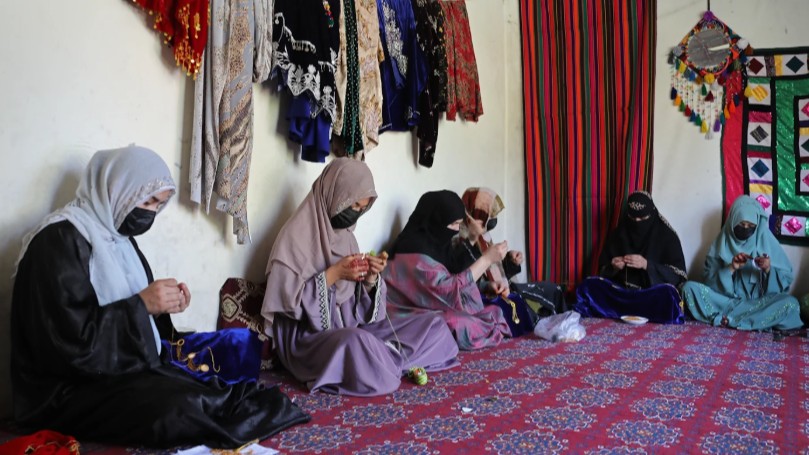
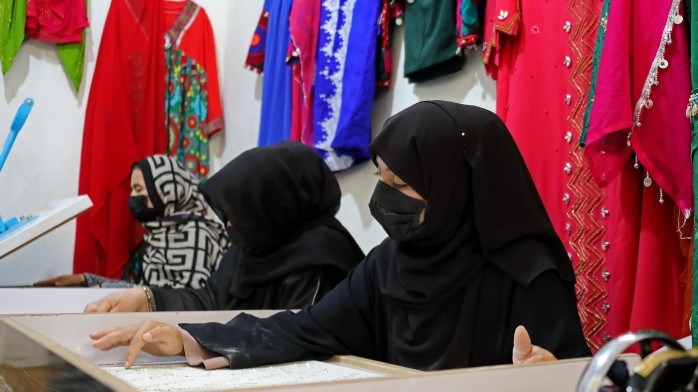
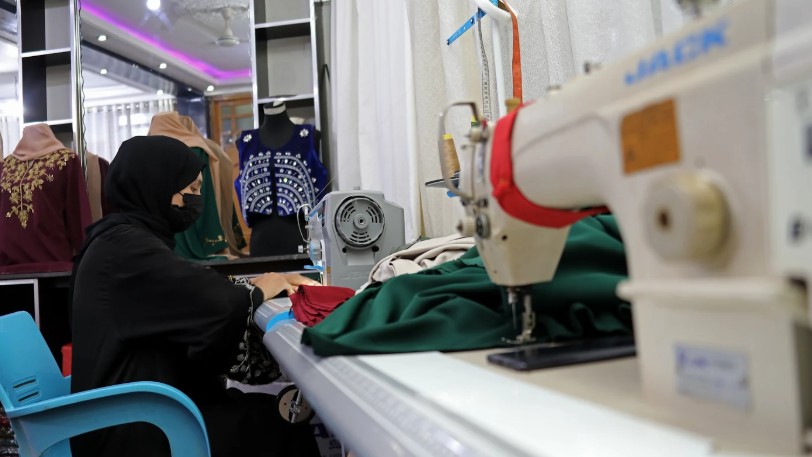
In Baghlan Province, the owner of Qamar Tailoring Centre has
transformed her small business into a growing source of employment and skills
development for women and girls.
Before receiving support, the centre operated on a small
scale, employing only four women and offering training to a limited number of
trainees. Limited access to equipment, financial resources and business
development opportunities made expansion difficult.
Through the Government of Japan-funded Strengthening Women's
Economic Activity in the Private Sector (WE-ACT) project, implemented by UNDP
in partnership with the Aga Khan Foundation (AKF), the centre received a USD
1,000 grant (approximately AFN 65,000) and equipment worth USD 600
(approximately AFN 39,000). The owner also completed 11 days of business and
marketing training.
The support helped her expand the business, increasing
employment from four to ten women, including two returnees. The centre now
produces different types of clothing based on customer orders and provides
tailoring and embroidery training to young women and girls, including 15
returnee trainees.
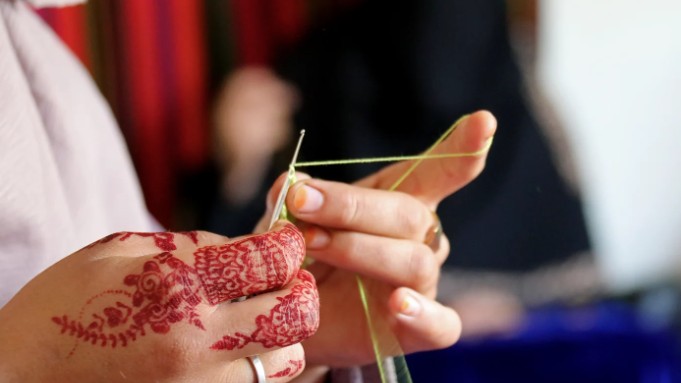
The change goes beyond employment. Trainees can now earn
money by helping complete customer orders, while many graduates have
established their own home-based businesses.
When Graphic Design Meets Tailoring: Sozha’s Story
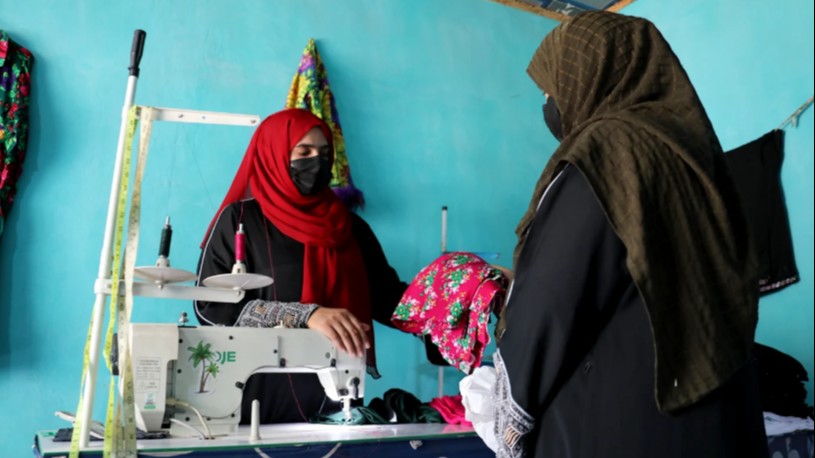
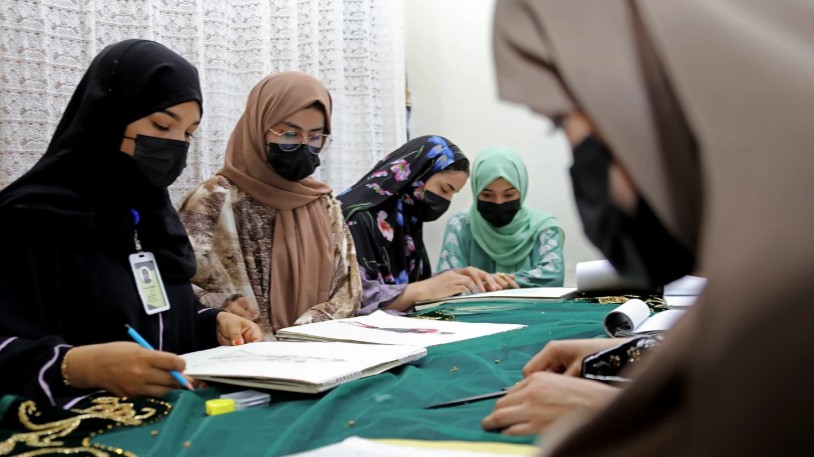
At 23, Sozha Nezami, a graphic design graduate and former
journalist, runs Luna Tailoring and Handicraft Centre in Kunduz, where women
turn their clothing sketches into finished garments.
She started her business with just two employees and a
monthly income of around AFN 10,000 (USD 154). With support from UNDP through
the Government of Japan's Japan Supplementary Budget (JSB), including a grant
of AFN 96,500 (USD 1,485) in 2024, Sozha purchased sewing machines and raw
materials to expand her business.
Today, she regularly employs six women and brings in an
additional four to five women during periods of increased demand. Her monthly
income has tripled to around AFN 30,000 (USD 462), sometimes reaching AFN
40,000 (USD 615).
Beyond her business, Sozha has organized eight training
cycles, helping women develop tailoring and embroidery skills. Currently, 13
women who returned from Iran are receiving six months of embroidery training at
her centre.
She Couldn’t Finish School, but She Didn’t Stop Learning
Khatera, 20, from Kunduz, dreamed of becoming a doctor but
could not continue her education after Grade 11. Three months ago, she joined a
tailoring centre run by Tabasom, where her sister also works as a teacher.
“Sitting at home and confined within four walls is not
good,” Khatera says. “It is better to come here and learn something.”
Tabasom received AFN 100,000 (approximately USD 1,538) from
UNDP through the ABADEI programme, supported by the Government of Japan through
the Japan Supplementary Budget (JSB). The funding helped her purchase equipment
and raw materials and expand her business.
Today, the centre trains 20 women and girls, including 15 in
tailoring and five in embroidery. Tabasom has also engaged 50 additional women
who make decorative garlands from home, receiving more than 60 percent of the
revenue as wages.
UNDP also provided a 7.5 kW solar PV system with battery
storage, helping reduce electricity costs and provide more reliable power.
“Now I can also contribute to my family financially,”
Tabasom says.
She Returned from Iran and Started Again
After being displaced by conflict and spending time in Iran,
a woman entrepreneur returned to Kunduz determined to rebuild her dairy
business.
Before the support, her Jawedan Dairy Processing Centre
processed around 250 kg of milk daily, employed four workers and supplied
products to nearby shops and local customers.
Through the Government of Japan-funded WE-ACT project,
implemented by UNDP in partnership with the Aga Khan Foundation (AKF), she
received business and marketing training, a grant and equipment to expand
production.
The change was significant. Jawedan Dairy Centre increased
its daily sales capacity from 250 kg to 500 kg, with the potential to process
up to 800 kg of milk per day. The business has also recruited 12 new employees,
including 7 returnees.
Today, Jawedan produces 400–500 kg of yogurt daily and
supplies dairy products to around 50 shops and Kunduz Prison, while also
reaching markets in Badakhshan.
She Studied Abroad. Now She’s Helping Women Back Home.
Born in Saudi Arabia, Sadiya earned a master's degree in
Islamic Studies before moving to Kunduz after marriage, where she found limited
opportunities for women to work or run businesses.
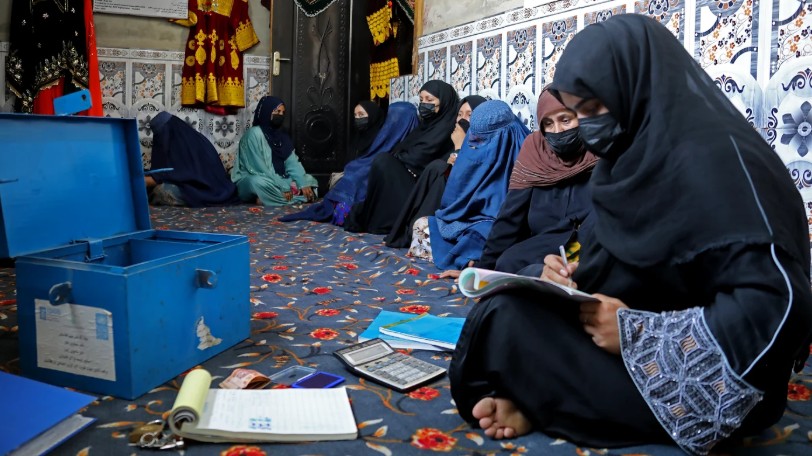
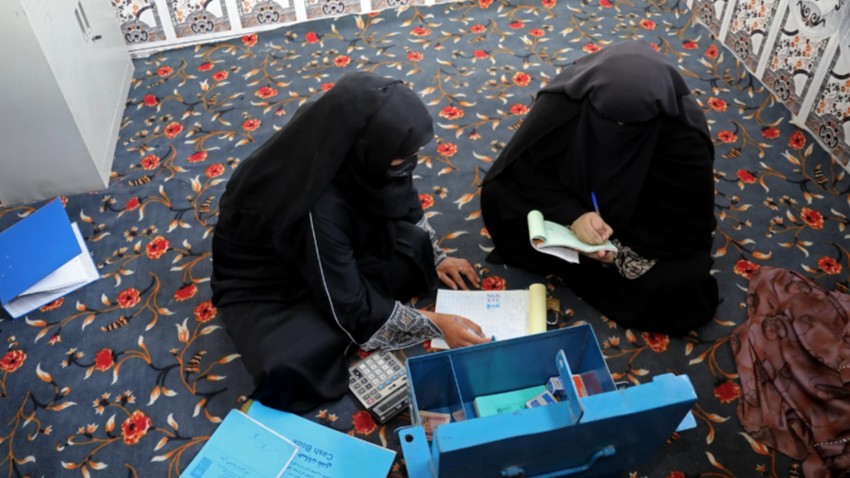
Today, she helps women in the Sesad Family area of Kunduz
City access small loans, manage their savings and develop business ideas. She
also uses her knowledge of Islamic Studies to raise awareness about women's
rights, particularly their right to work and earn an income.
Through UNDP's ABADEI 1.0 programme, the initiative received
USD 10,000 (approximately AFN 650,000) to strengthen 11 women-led savings
groups, comprising 119 women, with an average of 11 members per group. Each
group has a president, vice president and cashier responsible for managing its
activities and finances.
Women can access small loans to start or expand their
businesses and repay the funds so others can benefit. The initiative also
reports 30 to 40 women participating in the groups.
Sadiya encourages women to share what they learn about their
rights with their husbands and families. Having once struggled to find
opportunities for herself, she is now helping other women manage their finances
and build businesses of their own.
Behind every business is a woman determined to build a
better future for herself, her family and her community. Despite the challenges
they face, these women continue to find ways to use their skills, earn an
income and create opportunities for others. Their stories show that even modest
support can make a meaningful difference.
Your support matters. It changes lives. For Afghan women,
access to even a small opportunity can mean financial independence, renewed
confidence and hope for the future. Through initiatives such as UNDP's ABADEI
Programme and WE-ACT Project, supported by partners including Japan, continued
investment can help more women turn their determination into livelihoods,
support their families and build stronger communities across Afghanistan.
Editorial Note: This story was originally published
by UNDP Afghanistan and is republished by The Kabul Tribune with proper
attribution and a link to the original source.
UNDP
UNDP
UNDP
UNDP
UNDP
UNDP
UNDP