The Kabul Tribune (KT) — Iran is weighing whether to push hundreds of thousands of Afghan refugees across its western borders into Iraq and Turkey, part of what officials call a tougher, more unpredictable strategy following the bombing of its nuclear sites and the reimposition of UN sanctions, The Guardian reported.
The plan comes as Tehran rolls out a multi-pronged response
that includes expanding its missile program, bolstering air defenses,
suspending cooperation with UN nuclear inspectors, and on Oct. 18 blocking the
creation of a UN committee to oversee the sanctions. Iranian officials continue
to reject reopening talks with Washington, which they say would fail.
The threat to redirect refugees echoes Turkish President
Recep Tayyip Erdoğan’s past warnings about sending Syrian refugees into Europe.
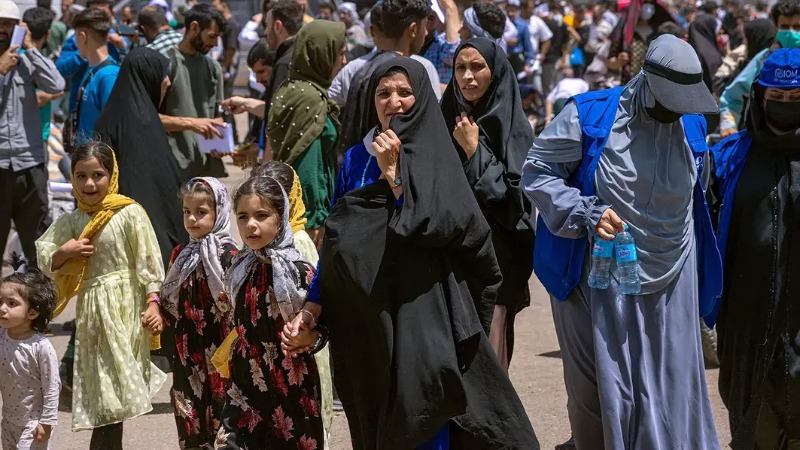
Iran has at times hosted as many as 6 million Afghans. Amnesty International
says that in 2025 alone, about 1 million were expelled, many returning to
Taliban-ruled Afghanistan or fleeing poverty. Since Israel’s June 12 strikes on
Iranian leadership and nuclear facilities, at least 500,000 Afghans have been
forced back, the rights group said.
Until March, millions of Afghans in Iran had been able to
temporarily legalize their status through “headcount” documents that granted
access to limited services such as healthcare, education and work
authorization. Authorities have since voided those papers. The UN refugee
agency estimates up to 4 million Afghans could be expelled this year.
Iran is also recalibrating its diplomatic strategy. Tehran
has recalled ambassadors from France, Germany and the U.K. for consultations
and offered at the UN to allow inspectors to visit its Natanz nuclear site and
report on enriched uranium stockpiles. In exchange, Iran wanted UN sanctions lifted
permanently. The U.S. declined to engage, The Guardian reported.
Another showdown looms Oct. 18, when Russia, holding the
Security Council presidency, is expected to block the formation of a UN body to
oversee the sanctions. Moscow and Beijing have argued European nations lacked
the authority to trigger “snapback” measures after exiting the nuclear deal.
While Japan, Canada and Turkey have moved to enforce
sanctions, other countries aligned with Russia and China may not. Erdoğan has
already ordered asset freezes on Iranian individuals and banks tied to the
nuclear program.
Iran says the restored UN sanctions are narrower than U.S.
measures, targeting assets, arms and missile trade but not oil. Still, Tehran
acknowledges the renewed restrictions have rattled markets. The Iranian rial
has hit a record low against the dollar on the open market.