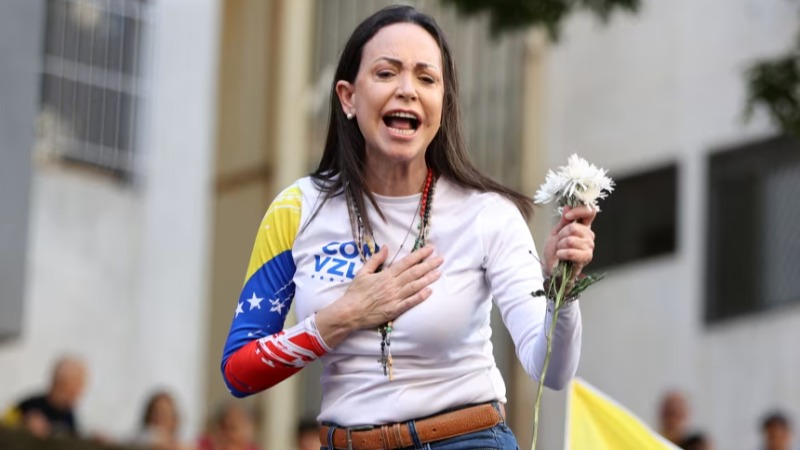
The official Nobel Prize page on X-Net is quoted: “Democracy is a prerequisite for sustainable peace. However, we live in a world where democracy is in retreat, where more authoritarian regimes challenge norms and resort to violence”
Maria Corina Machado: How women’s unarmed
resistance can inspire millions of women and girls around the world, especially
the brave and courageous women in Afghanistan
Maria Corina Machado was announced the
winner of the prestigious Nobel Peace Prize on October 10, 2025. She is a human
rights activist and opposition leader from Venezuela. She was born in Caracas
in 1967 and graduated from the Andrés Bello Catholic University with a degree
in industrial engineering. Machado is one of the leaders of the opposition
movement in Venezuela, who has repeatedly participated in popular protests to
criticize repression and defend human rights. In 2014, after her speech at the
Organization of American States criticizing the Maduro regime, her seat was
illegally revoked.
After years of tireless efforts to achieve democracy and a democratic system, Machado was awarded the European Parliament Prize for Freedom of Thought and Human Rights in 2024. In the same year, she received another prize from the Council of Europe for her defense of human rights in Venezuela. She has also won three other prestigious awards. In 2018, she was named one of the BBC's 100 Most Influential People in the World. She finally won the Nobel Peace Prize in 2025. However, due to security threats, she is now in hiding, a fate that is very similar to the situation of women in Afghanistan, who, despite their efforts for justice and freedom, have been forced into silence and isolation by authoritarian regimes.
Women in all societies stand stubbornly and
powerfully against oppression and tyranny. Millions of Afghan women and girls
have raised their voices against oppression and discrimination in every way
possible in the difficult conditions of Afghanistan. Like Machado, they are
condemned to a life of oppression at home. But they have responded to this
injustice in different ways. From clandestine education to virtual and cultural
activities, Afghan women are not only deprived of their most basic human rights
but also lose their meaningful connection to the world.
Although the geography and history of Afghanistan and Venezuela are different, the struggles of women in both countries are rooted in a common value. Women's courage in the face of injustice. Women from Kabul to Caracas have redefined the concept of peace and democracy with their steadfastness and strong will. Peace has not been achieved easily in any country. To achieve a prosperous society and a democratic system and an atmosphere free from injustice and tyranny, we need brave people and fighting leaders. Who make their voices heard in a peaceful way to the world. And most of all, this movement in every society has been women.
Just as the world is currently experiencing, women in Iran, Afghanistan, Ukraine, and Gaza are on the front lines of this global struggle, a struggle that sometimes costs them their lives. In no country in history have women been held captive by blatant discrimination and deprivation for four years in a row as the women of Afghanistan. They are not only denied the right to education and social participation, but are also condemned to learn knowledge that is censored and distorted by the Taliban. However, just as Maria Corina Machado inspired millions of women around the world, Afghan women will one day be remembered as symbols of courage and resistance to darkness. Perhaps years from now, an Afghan woman will be named on the list of Nobel Peace Prize winners, a prize for courage, perseverance, and faith in a more just future.
Disclaimer: The views and opinions expressed in this article are solely those of the author, Yusra Ansari, and do not necessarily reflect the views or policies of The Kabul Tribune. The publication takes no responsibility for the content of this piece.







