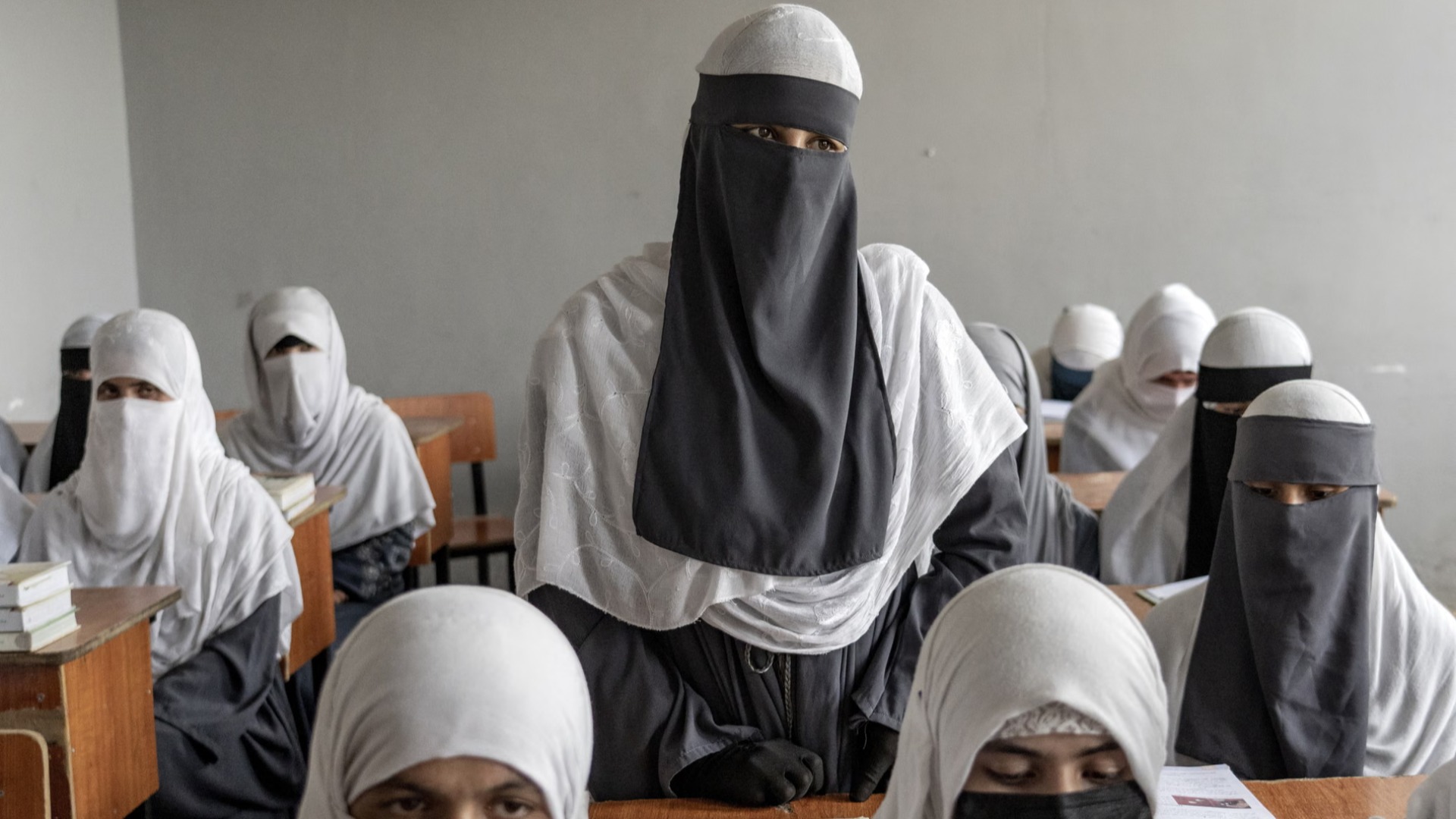
The Kabul Tribune (KT) — Families across Afghanistan are being pressured to send their daughters to Taliban-run religious schools as access to food aid and even jobs becomes increasingly tied to enrollment, according to an investigation by The Guardian and Zan Times.
Since banning girls and women from secondary and higher education more than four years ago, the Taliban have rapidly expanded a nationwide network of Islamic madrasas. The report says there were more than 21,000 such schools across the country by the end of 2024, with dozens more being built in the months since.
Families describe being offered food rations or threatened with losing assistance if they refuse to comply. “Send your daughters to our religious classes or you get nothing,” one mother in Nimroz province told The Guardian. Another recalled being promised food aid that never came after withdrawing her daughters from school at the request of a local mullah.
Teachers and activists say the effects are stark: public school classrooms are shrinking, qualified educators are being replaced by teenage madrasa graduates, and even experienced civil servants are being dismissed in favor of those holding religious certificates.
The curriculum in the Taliban-run schools focuses narrowly on Quran memorization and the group’s interpretation of Islamic law, excluding mathematics and science. Textbooks, mostly imported from Pakistan and printed in Pashto, are used even in Dari-speaking areas, leaving many children struggling to understand lessons.
The report also details cases in which international aid meant for public schools — including supplies from UNICEF — was diverted to madrasas.
For some women, the schools are a paradox. One former economics student in Herat said she attends a madrasa for the small stipend and the chance to leave her home. “If I stay home, I will lose my mind. If I go, at least I see other women,” she said.